When you think of a revolution, what springs to mind? Big battles, right? Maybe some ‘world changing’ invention? Well, what if I told you that the entire nations future was written in a farmers handbook? Sounds strange right? But thats exactly what happened. So, today were going to take a look at how a handful of farming books changed the face of not just Scotland, but the whole of modern Europe.
So, how did a pile of dusty old books help build a modern nation? Well, to find out, we have to go back in time. Back to Eighteenth Century Scotland. Something huge was happening. Now, the revolution wasn’t starting in the field just yet. Instead, it was starting on the printed page.
A Farming Revolution on the Page
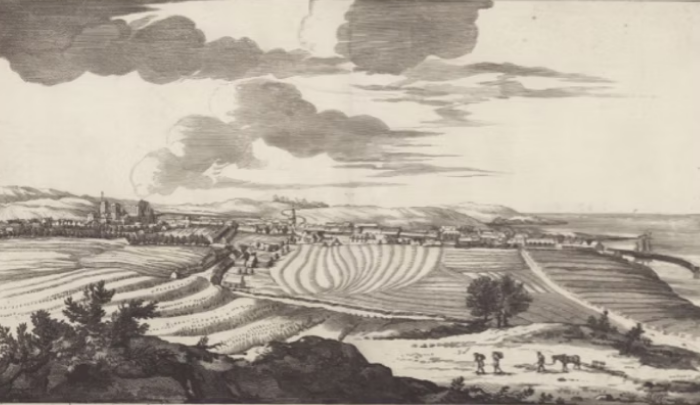
Okay, so picture this. Its the early 1700’s and Scotland is on the brink of something massive. A huge transformation. But its most important Industry, the thing that fed everyone, farming, was totally stuck in the past. Imagine being a farmer back in those days. Your smart, you want to do better and Improve your land. But where do you look for help? In the early 18th century in Scotland, there was nowhere else outside of the family business you could look. But it seems like you’ve been using the same methods since time began and getting nowhere. There needed to be some kind of studied, professional input if things were to improve.
But where was it? At this point in Scotland’s history, there wasn’t anywhere. This quote from contemporary agricultural writer Robert Maxwell in 1743 just nails it; “There are few Scots books written upon Husbandry”. People were desperate for New ideas, but there was a huge void of Scottish specific knowledge. With such a high demand for this sort of fresh input, something had to give, and it did. Scotland was about to undergo a huge publishing explosion.
Before the 1740’s there were only really a small trickle of books on farming in Scotland. These were mainly all copies of English books too. But then it took a Boom. As the pace of change in farming picked up, the printing presses went into overdrive. By the 1790’s, what had just been a trickle had turned into an absolute flood. The change was just staggering. In this short space of only Fifty years, Scotland went from being an information desert to having a full blown information revolution. A country where you could barely find a book on farming, suddenly had an abundance of them.
The Farming Best sellers
So then, what was ‘the’ book that farmers read back then? What were the bestsellers? Well, lets have a little look at that shall we? Lets break it down;.
Specific Guides
So these books were the original eighteenth century ‘How To’ videos. These guides were like manuals that farmers could read if they wanted to focus on just One thing. Something specific. There were many books that focused solely on things like how to farm certain crops. Or how to use and maintain certain types of tools. Or how to farm in certain conditions. Some of these books focused on specific farming methods and techniques. Exploring the most effective ways of carrying them out and so on.
It was actually quite surprising how much of this knowledge came as news to farmers whose families had been in the game for generations. Even certain thing that seem obvious to all farmers today like giving land a fallow year, were previously unknown to many.
The Scientific Basis
Now this is where things started to get exiting. Things started getting way more advanced. remember, the Scottish ‘Enlightenment’ period was happening around this time . Well, that intellectual fire power started to pour over into farming. Suddenly there came this whole new genre of farming books that were based on science. this was a big deal. It was a shift from ‘this is how my father and his father did it”, to a very rigorous, evidence based way of thinking about soil and plants and how everything grows.
Complete Systems
These books were ;like the encyclopaedias of farming. Massive, Multi volume books that explain entire eco systems and philosophy of agriculture. They were also often tailored to Scotland’s Unique soil and climate. These are the books that would have been read by the gentleman Farmer and were like the bible for any farmer who wanted to be modern.
The Knowledge Machine
So, we’ve got all these new ideas whirling around. But how do they actually get from an Authors ring into a farmers hands? Well, thats where we come to the next part of the story, the eighteenth Century knowledge machine.
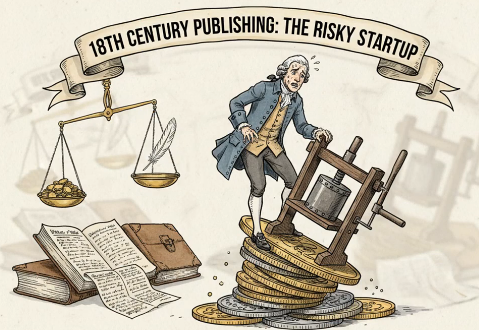
Now, you have to remember that publishing a book back then wasn’t easy. It was a high risk, super expensive gamble at best. It was a lot like a modern day test start-up. Anyone printing a book back in this day were often taking high financial risks in publishing their books with the high chance of them never seeing their money again.
Up until this point, after a lot of losses, the Authors and printers of the day had came up with what they saw as the Two best, risk assessed, effective ways of publishing a book. There Two main ways of publishing a book back then were;
Book Sellers
So, there was always the chance of getting your book published by having the book sellers sponsor your publishing costs. Afterall, if this was gonna be a best selling book, then the book sellers stood to gain a lot from getting it on their shelves. But not all books were best sellers and there was also a high risk involved for the investing Bookeseller. They weren’t gonna just throw money at the first author who walked in their doors.
No, these kind of deals were more suited to the more established author who was more of a sure bet. Or perhaps the book is on a subject that the particular bookseller has an affinity with so more likely to fund out of personal endeavour in publishing such literature. Although thats not to say that some book sellers didnt have an eye for talent. just like today, you got book sellers with an entrepreneurial mind and would take a chance on a new author. But these were quite rare at this time and with the amount of budding authors out there, there was quite a back log.
Subscription
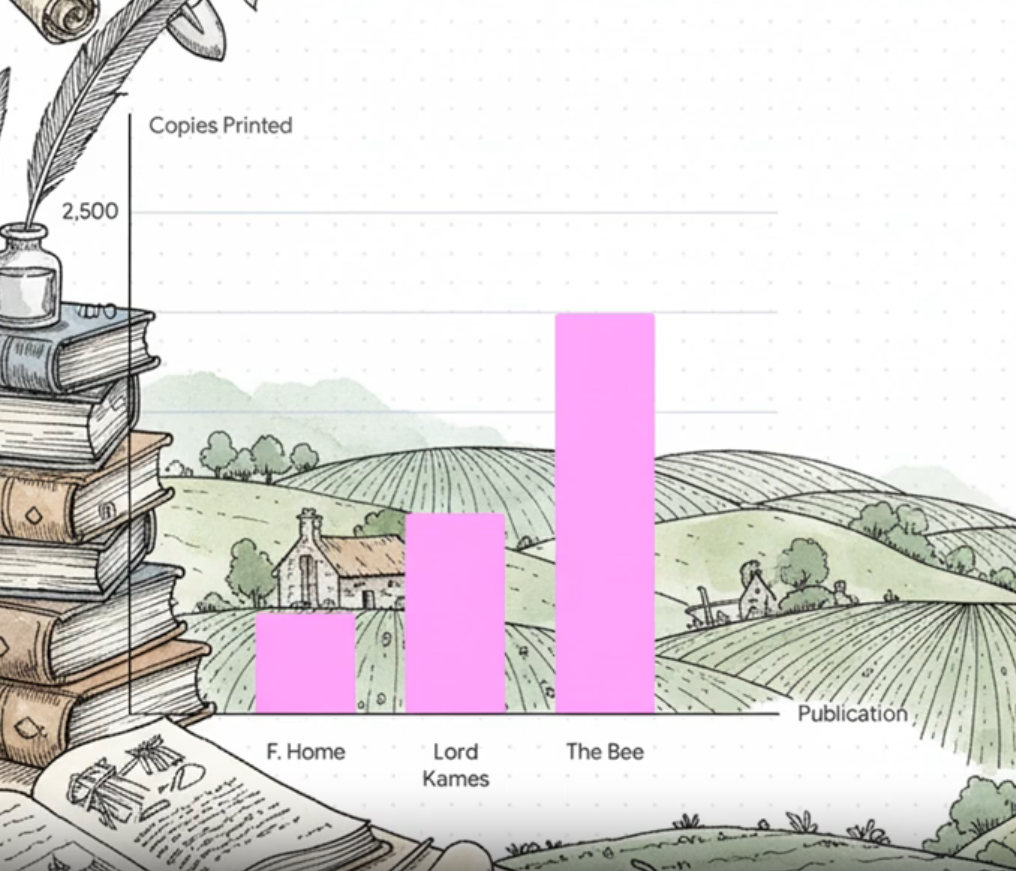
So, whats an author to do back in the 18th century if they weren’t famous, in with the in crowd or lucky enough yet? Well thats where the Second, and most popular option came in – Subscription. This was liberally an 18th century Kickstarter. readers would pre pay for the book, funding its creation. It was genius and it let all these new voices get heard. Well, what a demand there was. The appetite for this stuff was just off the chart.
Records from book sales around this time show an early subscription funded author called Frances Holmes sold a whopping Five Hundred copies each issue. A short while later though, a bestselling author Lord Kames doubled that with over a Thousand. But, by the 170’s a popular agricultural publication called ‘The Bee’ was selling a staggering Two Thousand copies every issue. See, it wasn’t just the Gen Z’ers who came up with the idea of Crowdfunding. Even the farmers way back in the1700s ere doing it from the field.
But the reality of this was grim. Even with the high demand for literature, it was still a really tough way to make a living. Most writers of the time had day jobs so to speak and would write more for the enjoyment of writing or teaching than to actually write for a living. One author of the day, David Young commented in 1791: “The sale of these sort of publications cannot be a lucrative business”. This was basically telling people that they weren’t about to get rich doing this. I think its important to remember that. Behind all these wonderful ideas, you had real lives. People who were just getting by.
Lords, Lawyers and Farmers
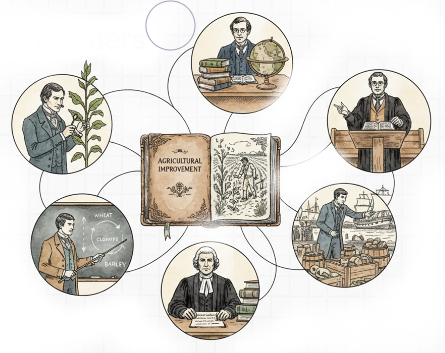
So, that begs the question, ‘Who were all these people?’. Who was writing these books and who was reading them? Well, that brings us to the Lords, the Lawyers and of course, to the Farmers. So take a guess. Who were the Authors of Scotland’s Agricultural revolution? Who do you think it was that sparked all this sudden change in farming?
Well, the answer may surprise you. If you were thinking that it was just a bunch of farmers, think again. The Authors were Doctors, Lawyers, University professors, Church Ministers, Merchants and School Teachers. Even One of Scotland’s top judges of the time, wrote a bestselling book on farming. This wasn’t just a niche interest for farmers, it was a full blown national obsession, importing people from every part of Scottish society.
The people reading them changed a lot over time too. Around the 1740’s it was pretty much just the wealthier class elite who got to read books. But by the 1780’s, these books were reaching a much broader audience. They were getting into the hands of educated tenant farmers. The people who were actually out in the field putting these ideas to work. This was a truly revolutionary time and the ripples were reaching out to the grass roots.
From Page to Plough
So this brings us to the final and most important piece of the puzzle. Answering that question we started with; How did this all go from the Page to the Plough? What was the real world impact? Now, of course, just like with any information explosion, much like whats happening on the internet today, there was a huge debate about quality. You had the sceptics complaining about the flood of books from writers who, as they put it, didnt even pretend to have experience.
But on the other side, you had the champions who said the best of these books were the most judicious and practical writings that were ever written. It was a classic problem, separating useful signals from all the noise. \But, despite all that noise, the signal got through. The best of these books really did translate theory into practice. They weren’t just words on a page. They were tools and these tools helped fuel an agricultural revolution, build a national economy and shaped an entirely new, modern Scotland.
So that brings us to One last question to ponder. Today, we’re swimming in data and endless digital documents. So what other seemingly boring manuals, technical reports and obscure documents of our time are quietly writing our future right now?