Heading Westward Across West Lothian into the Black West, we stumble upon the little village of Stoneyburn. Although just a small village, the nearby Bing from the old Foulshiels colliery serve as a landmark. With its coniferous covering, it stands out on the landscape and can be seen for miles.
The History of Stoneyburn
Stoneyburn is a village that was forged by and born out of coal. It was built in 1919 to house the miners of the nearby Foulsheils colliery which One Stood over the village with a commanding presence and who’s Bing can still be seen today, glowing in a a lovely green carpet of conifer. But back in its early days, that Bing wasn’t so green or pleasant
Foulsheils Colliery Era
Foulsheils Colliery was Established in 1903 and employed over 450 men to work down it s pit which had deep shafts that went 112 metres deep, and pulled out over 580 tons of coal each day. For a village the size of Stoneyburn, this made the colliery the economic heartbeat of Stoneyburn. So, the village of Stoneyburn was constructed to house these miners and their families. So the very existence of Stoneyburn was centred around and depended upon the Foulsheils Colliery.
The Foulsheils colliery was First sunk around 1897-98 by Union Collieries. It employed men who came from villages nearby. But the village of Stoneyburn was soon built It was a modern pit with Wide, deep shafts that the workers could get up and down with plenty of space. Back up top, it sported new state of the art Baths that could host up to 600 miners. More than ever worked at the pit at any One given time. Its good to be prepared and Foulsheils certainly was. The site also included a Canteen and Four Screens for grading coal.
But by 1919, coal production was up and the colliery required housing for its workers that would make the pit more accessible to the workforce. In 1919, the Colliery expanded its workers campus and the Housing Scheme was built in the neighbouring Railway village of Bents comprising of 138 homes.
Life Beyond the Pit
A diary entry from D-Day in 1945 , made by a local resident reads; “Bonfires were lit in every street and crowds gathered round them where we sang into the wee sma hours”. This little reminiscence goes to show the type of community spirit the village possessed back in those days. The entire village was built for the pit and all the men worked there. So the community was very close knit.
This strength of community was also manifested in the towns Football Club. “The Fulshie”, named appropriately after the colliery were formed in 1926 and played right through until 1958, a year after the pits closure. The Clubs playing field was founded on a base of debris from the Foulshiels Bing, giving it great drainage.
From Bing to Woodland
After years of the pit being gone and its grounds and Bing lying dormant, nature was reclaiming. In 1980, a regeneration project saw the Bing planted with conifer. By the early 1990s was really blooming. When the woodland trust bought up lots of farmland around the area, they took on Foulsheils Bing in 1996.
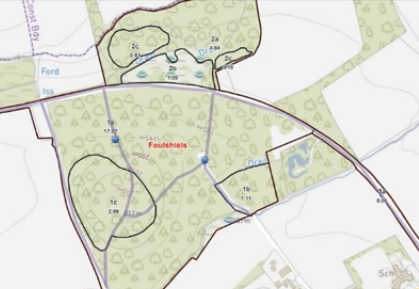
It was nurtured into the community woodland of Foulsheils Wood with ready accessible footpaths and a variety of over 44 different species of vegetation. In areas that were previously sterile Coal covered wasteland is now densely carpeted moss. In places that once had heavy metal pollution, you can now find plants such as the Common Twayblade
The regeneration of Foulsheils is a truly incredible ecological comeback. So Today, what was Once a Toxic Mine Site, is now a recognised biodiversity site. It has become a complex mosaic of Woodland, Wetland and Grassland, all carefully managed by The Woodland Trust to protect its value for both the people and wildlife. It has over Four Kilometres of footpath for recreation which connect to the wider network of footpaths and woodland walks all across West Lothian.
A Community’s Vision
However, the Foulsheils colliery regeneration isn’t just a story of Trees and wildlife. But also how its regeneration has affected the people who live around it. In 2013, the Stoneyburn Community group launched a survey to find out what the people of Stoneyburn want.
This led to a whole load of community efforts being made to build a new future for the community whilst keeping its past in memory. The Foulsheils community woodland has really become an asset to the people of Stoneyburn.
An Enduring Legacy
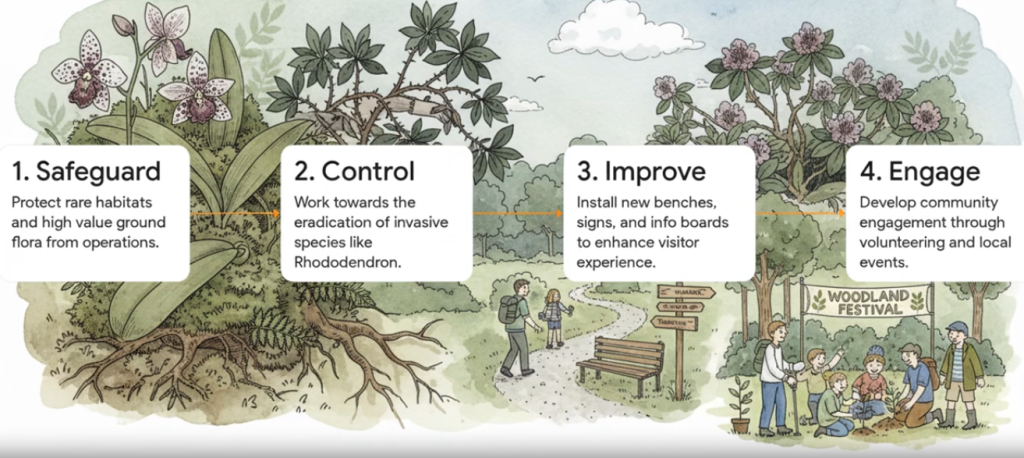
In 2024, the monument was erected to commemorate the miners. The Community continue to deal with ongoing problems. Solving and completing them One by One and the effort is really paying off. Besides tackling issues like Teenagers tearing Up the Ground with Motorbikes, Graffitti and vandalism around the Village, they also have a 5 year plan currently in action that will benefit the regeneration of the old colliery and community woodland. The 2022 to 2027 plan is a Four pronged approach;
- Safegaurd
- Protect rare habitats and high value ground Flora from operations.
- Control
- Work towards the eradication of invasive species like Rhododendron
- Improve
- Install New benches, signs and information boards to enhance visitors experiences.
- Engage
- Develop community engagement through volunteering and local events.