
If you draw a line through the heart of West Lothian, Scotland, you don’t just divide a county; you divide the earth itself. To the east lies what historians and locals often call the ‘Red East.’ Here, the landscape was once dominated by the Red bings of the shale industry. But if you travel West, tracing a rough geographic loop from Bathgate, rolling west to Blackridge, heading south down to the high moorlands of Fauldhouse, curving back east to Stoneyburn, and then north again through Blackburn to complete the circuit at Bathgate, you enter an entirely different world – The Black West!
Welcome to the ‘Black West.’
This was the undisputed heartland of West Lothian’s coal and ironstone mining. Here, the spoils of the earth were not red, but a deep, unforgiving black. The massive spoil heaps, or ‘Black Bings’, were forged from colliery waste, unburnt rock, and the sweat of generations. At the absolute epicentre of this subterranean kingdom is Whitburn Cross. Stand at this historic crossroads, and you are positioned at the nexus of the four great segments that drove the Black West’s industrial supremacy: Torbane, Southrigg, Foulshiels, and the mighty Polkemmet.
This is the story of how the Black West was built, how it thrived in the dark, and how it tragically died.
The Awakening: The Early 19th Century and the Dixon Pits
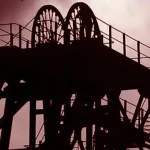
For centuries, coal in West Lothian was a localized affair. Early records show monks and local landowners scratching at the surface where black seams breached the grass. They utilised crude ‘bell pits’—shallow, bell-shaped holes dug just deep enough to extract the easily reachable coal before the roof collapsed or the pit flooded, forcing the miners to move a few yards away and start again.
But the dawn of the 19th century brought the Industrial Revolution, and with it, an insatiable hunger for fuel. The ironworks of central Scotland were roaring to life, and they needed coal and ironstone to feed their massive blast furnaces.
The transformation of the Black West from a patchwork of shallow scratchings into an industrial powerhouse was largely driven by visionary capitalists and aggressive mining companies. Chief among these was William Dixon Ltd. The Dixons, who had already built a massive empire in Lanarkshire (including the famous Govan Iron Works), looked to the high grounds of Fauldhouse and saw a geological lottery ticket.
The Dixon pits around Fauldhouse and Crofthead marked a massive leap in mining methods. They moved away from adits (horizontal tunnels driven into hillsides) and bell pits, and began sinking true vertical shafts. Pits like Fauldhouse No. 1 and No. 9 began systematically extracting the ‘Slatyband Ironstone’ and the rich ‘Shotts Ball’ coal seams.
This era introduced steam-powered winding gear to lift heavier loads of coal and men, and crucial steam-driven beam engines to pump out the millions of gallons of water that naturally flooded the deep workings. The Dixon pits also brought the railways. To move thousands of tons of heavy minerals, the Black West was rapidly stitched together by iron rails, connecting isolated moorland villages to the hungry markets of Glasgow and the sea. The Black West had officially taken off.
The Four Quarters of the Black West
By the late 19th and early 20th centuries, the industry had matured. Deep shaft mining was now the standard. The epicentre of this boom was Whitburn, with four distinct geographic and cultural segments sprawling out from the Cross, each with its own unique identity and contribution to the Black West.
1. Torbane: The Miracle Mineral
To the northwest lay Torbane, an area that secured its place in global geological history in the 1850s. Miners here didn’t just find coal; they found the ‘Torbanehill Mineral,’ also known as Boghead Gas Coal. This was a highly unusual, incredibly rich cannel coal that was so volatile it could be easily distilled into oil and lighting gas.
It was so unique that it sparked a landmark international legal dispute in 1853. The landowner, who had leased the rights to mine “coal” to James Russel & Son, sued the miners, claiming that the Torbanehill mineral was actually a type of shale or oil-rock, and therefore not covered by the coal lease. After a spectacular trial featuring the world’s leading geologists and chemists, the jury decided it was coal. The Torbane pits (like Torbane No. 2) were relatively early and shallow compared to what came later, but the wealth generated from this small segment was astronomical, briefly lighting up the streets of London and beyond with its high-quality gas.
2. Southrigg: The Southern Frontier
Pushing southwest from Whitburn towards Fauldhouse and the Lanarkshire border lay the Southrigg segment. Dominated by companies like The United Collieries Ltd, the Southrigg pits (Numbers 3, 4, 7, and 8) represented the steady, gruelling heartbeat of the Black West.
Sunk around the turn of the 20th century, these deep shaft mines required massive surface infrastructure. They employed hundreds of men both above and below ground. Southrigg was characterised by its complex network of branch railways and “bogies” (small wagons) that zigzagged across the bleak moorland, constantly feeding the mainline railways. The communities that sprang up around Southrigg were tightly knit, forged by isolation and the shared, ever-present dangers of the deep earth.
3. Foulshiels: The Mid-Century Workhorse
To the east and south of Whitburn, near the village of Stoneyburn, sat Foulshiels Colliery. Opening just before the dawn of the 20th century, Foulshiels was the quintessential mid-sized deep shaft mine of the Black West. At its peak, it employed around 450 men, producing hundreds of tons of house and steam coal every single day.
Foulshiels is remembered for the incredible camaraderie of its workforce. It was a pit where fathers, sons, and uncles worked the same terrifyingly cramped seams. The physical toll here was immense, with miners working the longwall method—lying on their sides in seams barely two feet high, hacking away at the coal face in stifling heat and dust. Foulshiels operated until the late 1950s, when the seams were exhausted and the men were transferred to the newer, nearby Cuthill drift mine. Today, the Foulshiels site is a Woodland Trust reserve, where nature has bravely reclaimed the black earth, though the undulating shapes of the landscape still betray the industrial violence that once occurred here.
4. Polkemmet: The Giant of the West
Finally, to the west of Whitburn, stood the undisputed king of the Black West: Polkemmet Colliery.
Sunk in 1913 and reaching full production in the 1920s, Polkemmet was a behemoth. It possessed the deepest pit shafts in Scotland and eventually became the largest colliery in West Lothian. At its zenith, it employed nearly 1,500 people.
Polkemmet was a modern colliery. It featured beautiful Art Deco pithead baths (the second largest in Scotland at the time), allowing miners to wash the black dust off before returning to their families—a luxury early 19th-century miners could scarcely have imagined. Polkemmet’s lifeblood was a high-quality coking coal, which was transported almost exclusively by rail to feed the ravenous blast furnaces of the Ravenscraig steelworks in Motherwell.
The visual icon of Polkemmet was its fleet of ‘pugs’—stout, powerful little steam locomotives that hauled massive lines of coal wagons up the steep, greasy inclines of the colliery bing. Long after mainlines had switched to diesel, the Polkemmet pugs continued to belch steam and black smoke into the West Lothian sky, attracting railway enthusiasts from across Britain.
Life in the Shadow of the Black Bings
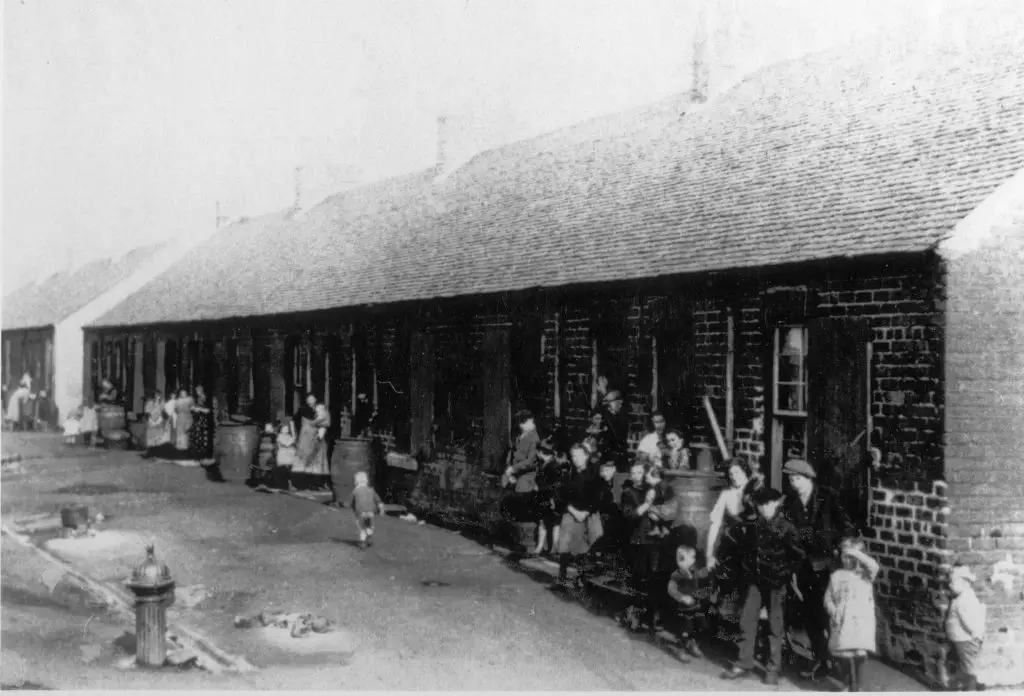
To understand the Black West, you must understand the culture it birthed. The villages of Bathgate, Blackridge, Fauldhouse, Stoneyburn, and Whitburn were not merely residential zones; they were industrial barracks. Life was entirely dictated by the whistle of the pithead.
The landscape was apocalyptic yet awe-inspiring. The Black Bings—mountains of waste rock and slack—towered over the terraced miners’ rows. In the winter, the bings would sometimes spontaneously combust deep inside, venting sulfurous fumes and glowing with an eerie, subterranean fire in the dark.
Yet, amidst the soot and the ever-present danger of roof falls, firedamp explosions, and pneumoconiosis (black lung), a brilliant, vibrant culture thrived. The miners’ institutes, funded by pennies docked from the men’s wages, became the centers of social life, offering libraries, billiards, and debating societies. Brass bands, pigeon racing, and the sacred tradition of the annual Miners’ Gala Day provided colour and joy in a landscape painted in shades of grey and black.
The Black West was defined by a fierce, protective solidarity. When the pit siren wailed at an unexpected hour, the whole village would freeze, women running to the pithead with their hearts in their mouths, praying the casualty wasn’t theirs.
The Bitter End: The 1984-85 Strike
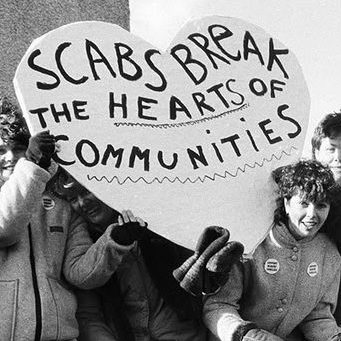
For nearly two centuries, coal was the undisputed master of the Black West. But the end, when it came, was rapid, bitter, and politically charged.
By the 1980s, the British coal industry was in decline, facing cheap foreign imports and a Conservative government determined to break the power of the National Union of Mineworkers (NUM). In March 1984, a national strike was called in response to planned pit closures. The miners of the Black West walked out, standing shoulder-to-shoulder with their comrades across the UK.
The 1984-85 strike was a period of desperate hardship for the communities of Fauldhouse, Stoneyburn, and Whitburn. Soup kitchens were set up in miners’ welfare halls. Families burned whatever they could find to keep warm through the freezing winter. The strike was a fight for the very existence of their communities.
But it was during this strike that the Black West suffered a fatal wound.
The Flooding of Polkemmet
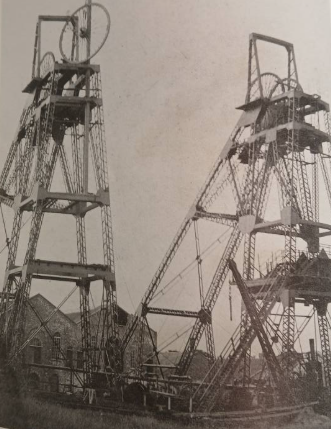
Deep shaft mines like Polkemmet require constant pumping to prevent the natural ingress of groundwater. Ordinarily, during strikes, unions permitted ‘safety cover’—a skeleton crew of engineers who kept the pumps running to stop the pits from drowning. However, as the strike grew increasingly bitter and a handful of men broke the picket lines to return to work, the unions made a fateful decision: they withdrew the safety cover.
At Polkemmet, the power was cut. The massive pumps deep in the Scottish earth fell silent.
Slowly, inexorably, millions of gallons of cold, highly acidic mine water began to rise. It swallowed the deep roadways, it flooded the coal faces, and it destroyed millions of pounds worth of heavy cutting machinery left at the bottom. By the time the strike collapsed in March 1985 and the defeated miners marched back to work behind their brass bands, it was too late.
The National Coal Board inspected Polkemmet and declared it unviable. The cost of pumping out the subterranean ocean and replacing the ruined machinery was deemed too high. The deepest pit in Scotland, the giant of the Black West, was abandoned. Over 800 men were made redundant, with others scattered to surviving pits elsewhere.
With the death of Polkemmet, the coal industry in West Lothian effectively died. The economic shockwave devastated Whitburn and its surrounding villages. Generations of highly skilled men were suddenly cast adrift in an era of mass deindustrialisation.
The Legacy of the Black West Today
Today, if you drive the loop from Bathgate through Blackridge, Fauldhouse, Stoneyburn, and Blackburn, the physical scars of the Black West are fading.
The aggressive environmental reclamation projects of the late 20th and early 21st centuries have transformed the landscape. Foulshiels is a tranquil woodland. The massive bing at Polkemmet, once a towering monument of black waste that famously caught fire and blanketed Whitburn in toxic smoke in the late 1990s, has been entirely reprofiled. It is now the site of ‘Heartlands’—a massive £500 million regeneration project featuring thousands of new homes, a business park, and a championship golf course.
The pugs are gone. The winding wheels have been dismantled, save for a few kept as monuments, like the commemorative wheel at Whitrigg. The sky is no longer stained with soot.
Yet, the legacy of the Black West cannot be erased by landscaping. It lives on in the DNA of the towns and villages it birthed. It is remembered in the high streets laid out to accommodate miners’ rows, in the welfare clubs that still serve the community, and in the Gala days that are still fiercely celebrated every summer.
The contrast between the Red East and the Black West is no longer visible in the colour of the industrial waste on the horizon. But for those who know where to look, the echoes of the deep shafts, the ring of the miner’s pick, and the roar of the Polkemmet pugs still resonate profoundly across the moors of West Lothian. The Black West may be buried, but it will never be forgotten.