So, most of us are well aware of the Highland Clearances. A dispersing of the Scottish Highland Clans with the eviction and evacuation of hundreds of the Glens that were their homes. These 19th century clearances left the highlands a vast unpopulated land mass. However, It’s far less often, if ever, that we her about the Lowland Clearances of the previous century.
Now, while it may be argued that the Highland clearances were far more bloody, the Lowland clearances probably had a far bigger Impact on the land, the population and societal structure of Scotland. Since the mass mobilisation and displacement of population in the highlands was met with much more violence and force, they were often seen as worse. The clearances of the Lowlands on the other hand, was Induced more passively.
therefor, the Highland Clearances are the ones that stand out more in history due t the visible \atrocities that surrounded the. But when we actually take a look at the bigger picture.
The Impact of the Clearances
It must be said that both the Highland and Lowland clearances had an Impact on Scotland. Especially upon the Millions of people who were displaced by this sudden mobilisation of the populace. Though each had their Impact on the land in different ways.
The Highland Clearances

So, in the times leading up to the highland clearances, the highlands were already in a desperate situation. Since the formation of the Union of Crowns in 1603, the highlanders had been missing a key part in their economy – War. Back when Scotland and England were still separate countries, a war with England each year brought a summer full for raiding south of the border for the majority of Highlanders.
This was how Scottish Kings could raise an army of Highlanders pretty quick. The highland terrain provided little to no arable land for sewing crops and only livestock could be kept on this almost barren and mountainous heathland. A campaign every summer meant that the highlanders could go fill their pockets with lootings to tide their families over the winters.
On the Lump
But when the Crowns united after the Scottish King James VI Inherited England and Wales, this became problematic because their was no reason to gpo to war anymore. This situation was treated with a pension from the King each year. He would have a sum of Gold delivered to the Clan chiefs each year to compensate their loss of earnings. Or to be more precise, lootings.
This was, in effect, probably the First ever benefits system in Scotland and Indeed Britain. It was an economic arrangement that kept the people few, watered and at peace with the rest of the land whilst still maintaining the old arrangement of ‘Fealty’, that allowed the Kings to call up and assemble a highland Army whenever, If at all needed.
The Cut
But this arrangement was brought to a swift end in 1688 with the arrival of the new Stand in King, William III, Prince of Orange. This new Dutch King couldn’t comprehend why Kings were being Taxed by their subjects and quickly turned it around, Issuing Tax bills Instead of Pensions.
Now it was up to these already struggling clans of the highlands to raise money somehow. to pay their Tax to the King. This Tax demand was not to be taken lightly and failure to comply was met with brutal consequences. A prime example of this was the massacre of the McDonald’s of Glencoe, after the clan chief MacIain had failed to meet the New Years deadline.
We can see from this why the Scottish highlands had a lot of support for the Jacobite cause that dominated the latter part of the 17th century and early 18th century. Many of the highland clans affected heavily by Williams reforms supported his father in Law, the last Stuart King, James VII in the 1688 Jacobite rebellion and later, his son, the pretended James the 8th. But after the defeat of his son Charles Stuart , the last of the Royal Stewart Dynasty in 1745, the highlands were left both defeated and desolate.
A Barren Wilderness
So, by the times of the Highland clearances in the late 18th century and throughout the 19th century, the highlands were already bare. We often hear romanticised hypothesis on ‘What the highlands would be like had it not been for the clearances’ that paints a picture of an landscape of bustling communities with a thriving economy. But this was never the case. The highlands were never a thriving economy in peace times. Thats why they were on the Dole throughout the 17th century Anglo-Scots ceasefire.
When we look at places like the Island of St. Kilda’s which was evacuated in the 1940’s due to extra hardship and poverty with malnutrition and poor health was rife. Life in the Highlands since the clearances would have never been easy. Not unless you owned or worked on One of the many vast estates that swallowed up vast amounts of land yet home only a few people. It’s true that brutal force was used against highlanders reluctant to move off the land during the clearances. But this was more of an Issue of Dignity and reluctance to be dispersed from their Kin and homes.
The Dispersal of the Clans
But had this not happened, it would have doubtlessly only been a matter of time before the will to survive would have taken them to the Big Towns and cities or overseas to find work. Or Joined the army. Indeed, it did make sense for the Hanoverian Kings to have this redundant portion of the population moved out of the area that kept them redundant. Afterall all, they had Empires to build, wars to fight and Armies to raise in order to fight them. It also made sense to disperse these potential militias and recruit their boldest Into the fast growing British Army.
But I think this Idea of the Kings determination to smash the clan structure often gets given too much credence. In reality, most of the Landowning upper classes who owned the estates didnt give the Clans as much thought as legend would have it. All they saw was people. People who cost them in taxes. Whilst sheep were actually making them money and they didnt have to worry about the sheep kicking off if they didnt feed them well enough.
The Lowland Clearances
The Lowland Clearances happened in Scotland around a century prior to their highland counterparts. But due to this clearance of population having little record of violence and no significant violent atrocities attached, it is often overlooked. Many see them as being nowhere near as tough as the Highland clearances. Some may even argue that the Lowlanders who were moved from their homes during these times ‘weren’t even Scottish’ and were Instead of Cumbrian and Northumbrian descent. Or of Flemish and Dutch descent.
Whilst true that there was Indeed a high count of Flemish and Dutch settlers who had settled in the Lowlands a few centuries previous, the People were as Scottish as much as the highlanders and the Lowland villages they were moved from were their homes. Of course, in ancient times, the Celts who Inhabited the Lowlands were more Akin to the Cumbrian and Welsh P=Celtic peoples than the Gaeilic speaking Q- Celtic Highlanders. But this was only a generalisation and we all came from somewhere else if we trace our ancestry back far enough.
So, to say that the Lowland clearances had lesser meaning simply because of who the peoples supposed ancestors were would be ridiculous. Most of the people of the Lowlands who were displaced would have been completely Scottish and would have probably have lived in their communities for generations. The Upheaval of being moved from their home, albeit passively, would have affected them just as much as it affected the highlanders. Just because they weren’t physically brutalised, doesn’t mean it didnt pain them to leave their homes and families for the unknown.
The Lowlands before the Great Improvement
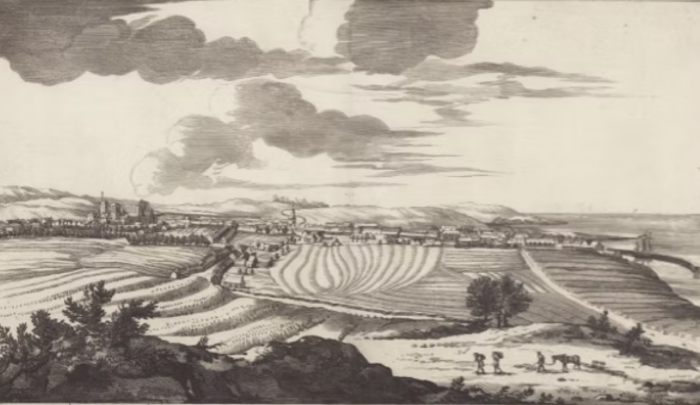
Prior to the ‘Great Improvement’ of the 18th century, the land of the Scottish Lowlands would have looked so much different to how it looks today. Those big square and rectangular fields full of crops we see today, didnt exist. Instead you had heathland and Bogland, with pockets of Runrig farming dotted all over. These were collectively run community farms of around 50 to 60 people.
Everyone worked the ‘Fermetoun’. With the land being divided into long ridged strips, every family could cultivate their own crops. Others in the community would have kept Chickens, Geese, Cows, sheep and other Livestock that brought production. Payment in Kind was paid as rent to the Landowners who were happy to leave farming to the farmers.
But this method of farming didnt always work though. Methods of farming were passed on orally from generation to generation. Although perhaps noble, this method of teaching couldn’t be relied upon for the best results. Afterall, all it took was just One person to get it wrong and you have an entire community running on a tradition of mistakes. So crops would often fail. The land would often be blamed for this and the strips would alternate tenants each year so that everyone gets a chance with the most fertile land. Other failures were treated by offering up prayers at ‘Holy Wells’ and churches, etc.
The Great Enlightenment
Now, the turning point came in he early 18th century with the arrival of what is known as the Great Scottish Enlightenment’. This was a renaissance in Scotland which saw the great universities buzzing with ideas and enthusiasm. It was a revolutionary era for progress in the Sciences and saw a whole plethora of great discoveries in many fields. Including the farmers field. That’s right. The study and pioneering of the sciences also reached agriculture. This was a matter previously left to the Fermetoun residents who tilled the land. But, as the sons of the landowning nobility started to apply the Scientific Theory they had learned to practical tasks like farming, great changes occurred.
The Agricultural Revolution
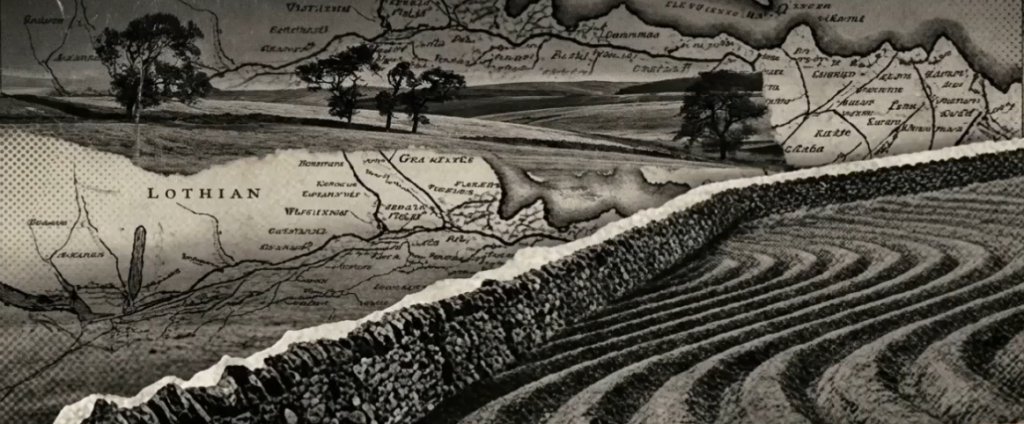
These new young Gentleman Farmers who had either Inherited land or purchased it, put their theories to the test. The first swept away the bumpy Runrig terrain and Cottars and levelled the land into big square and rectangular fields. Ditches were strategically laid to create an irrigation system that benefitted the crops cultivation and Yield. This new change in Irrigation would change the complete Infrastructure of not only the land It was on but also the broader area. A most notable example of this was how the Irrigation shifts on the Cult Estate near Whitburn led to the discovery of Black Gold on the neighbouring Torbanehhill Estate.
These fields would be bordered by rows of Trees thatd act as a windbreak and dry stone walling, often made of the stone from the demolished cottages of the Fermetoun Cottars. There was no need for entire communities to work small strips each when One single tenant farmer and his family could run an entire farm. These are the modern day farms we see today. But you may have wondered why many of these farms show up on ancient maps when the towns we know dont. Thats because all these places that we now know as farms, were actually all previously Fermetouns. Little villages where the communities worked the surrounding land collectively.
There were more of these too. But over the years, many farms grew bigger and took over smaller neighbouring farms, making it bigger. So, the lowlands prior to the Great Improvement of the 18th century would have been clustered with tiny little villages amongst the Hilly Heath and Marshy Bogland. The entire landscape and Infrastructure of the Lowlands would have been world’s apart from how it is today. No big fields with walls. More like a wilderness of heathen communities with very few clear roads to traverse it.
The Clearances
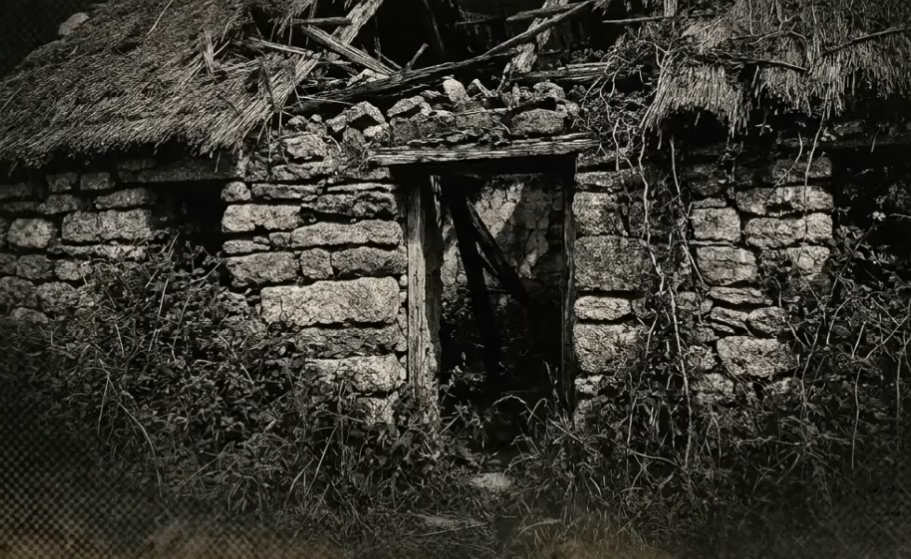
So, If these little villages were demolished and their stone used to build walls for the fields, what happened to their residents? Well, most of these people were cleared off the land that theyd always called ‘home’. Why would these new Gentleman farmers want to keep hundreds of residents on his land? Always scratching it for what they could get to pay him rent. He could just as easily keep One Family on the land to manage the farm and have them pay him rent in Cash, not Kind.
This new economic arrangement boosted up the profit and forced the Tenant farmers to get Innovative and use their savvy and the land to generate extra income to help pay the rent. But the new formula the landowners were using to maximise profit came with increasing demands oh higher rents. This kept the poor working harder to make the rich even richer. But It also completely changed the economic system of Scotland as well as Introducing modern farming methods.
Local Enterprise
So, these enterprises would have created a few jobs for people to stay in the vicinity for, working as Blacksmiths, Saddlers, Farriers a, Bodgers, Game keepers and so on. Some drifted towards Industry in some of the little Weaving villages that would eventually grow into some of todays Towns. Others would have made for the bigger cities of Glasgow and Edinburgh to find work in the ever growing number of Factories and Mills which made these towns boom in size over the next century or so.
Mass Emigration
But the vast majority of the Lowland populace who were cleared out of the fermetouns, headed overseas. Many emigrated to the New World’ countries like Canada, New Zealand, Australia and the United States in search for work and a better life. Hundreds of Thousands of Lowland Scot’s left their native country for foreign shores during these clearances.
More people than left during the highland clearances. Most of the people who lived in the lowland areas like West Lothian would have moved away from Scotland altogether.
The Black Gold Rush
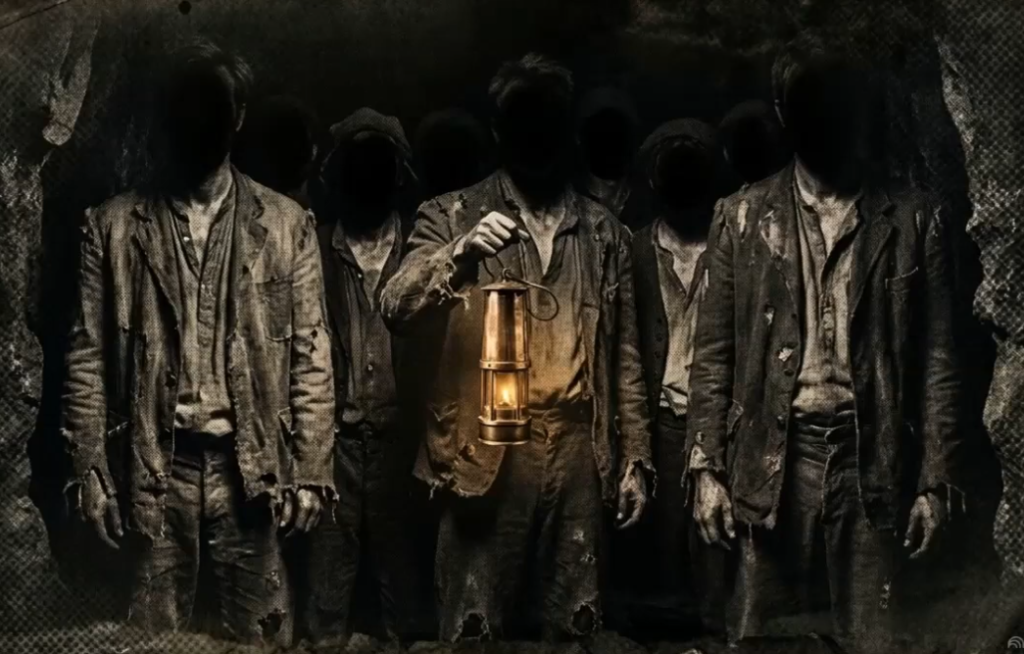
However, It wasn’t just agriculture that dominated the Lowlands after the clearances. Due to the massive overhaul on a lot of the lands in the lowlands, a new era was born. The ‘Black Gold Era’ of mining. Throughout the 19th century, at the time of the Highland Clearances, Coal and Shale Mining was really taking off right across the lowlands of Scotland. This in turn fuelled the Steam Age and later led to the discovery of Petroleum that gave birth to the modern age.
This new boom of Industrial activity swept across the Lowlands and brought workers from all over. Lowlanders, Highlanders as well as many Immigrants from Ireland, Poland, Lithuania, Latvia, Ukraine. With the abolition of Slavery in Scotland in 1799, this allowed the mining companies to hire miners cheaply with no responsibility for them.
The workers lived in purpose built ‘Company Towns’ which were not much more than workcamps with brick tents. Rows of miners cottages, mostly single room with a fireplace. Many of these villages had no running water. So people were having to drink out of the nearby ditch and disease was rife. Scarlet Fever, Cholera, Small Pox, etc.
Then and Now
When we take Into account what both the Highlands and Lowlands were like before the clearances, we can get a better Idea on how much each of them Impacted the land upon which they Occurred.
The Highlands
So, when we take a look at the Highlands Today, It doesn’t look all that much different from how it looked centuries ago. Of course, the ruined cottages we see scattered throughout the glens would have Turf roofs on them and there would have been lots of people around. But since the clearances, the land hasn’t really changed much at all as It has been almost unpopulated. Apart from a small handful of people who either own estates or work on them.
So the population is down by about 99%. But the land Itself hasn’t changed much at all. It has also been argued that for the people to live on the land in the Highlands at the time of the clearances, if not in extreme poverty, were both redundant and a burden to the system. Clearing the people out of the highlands drove the people towards the Industrial revolution that was on the rise everywhere else I the world except for the Scottish Highlands.
But what It did change was the Old Celtic Clan structure that made the highlands uncontrollable and unable to subdue for centuries prior to the clearances. With it, an entire way of life. As the Highlanders entered the fast growing Cities of Scotland or in other countries, the old highland way of life was quickly crushed under the laborious life and cramped living conditions of the Industrial age. So, for the highlands, the biggest change really was for the people rather than the land. It affected Celtic Society more than It affected Scotland as a country.
The Lowlands
Now, when we look at how the Lowlands of Scotland looked before the clearances and compare it to how they look today, It’d be like a completely different world. Unlike the Highlands, the Lowlands were far more potential for creating arable farmland. So the changes to the Infrastructure that triggered the Lowland Clearances created a whole new canvas for yet another revolution. An Industrial One. This In turn came with Its own alterations to the landscape that was eventually followed up with further landscape overhaul over the past few decades, repairing the scars of the Industrial Era.
When you look at the population of the Lowlands today, It’s like an entirely different place. West Lothian for Instance has transformed from the bleak wilderness of Hilly health and marshy bogland with settlements dotted throughout, to the completely habitable arable landscape we see today, dotted with man-made mounds that stand testament to the Industrial era between.
But although the population of the lowlands has almost quadrupled since the clearances, the population has changed Immensely. Most of todays Lowland population are descendants of ancestors who movedInto the lowlands since the clearances. Dont get me wrong. There are still Indeed families who never moved that far. But the vast majority of Lowlands Scots in the 18th and 19th century were displaced from their homes.
Discover More
If the lowland clearances are something that Interest you, then you may be Interested to know that we are running a month long feature on The Lowland Clearances this June, here at The West Lothian History Hub. Why not join our Explorers Club and get all our articles and features delivered right to you as soon as we publish them? It’s completely Free and has a range of benefits to take advantage of.