
The Dumback watermill was situated high upstream on the River Almond on the Polkemmet Estate, just west of Whitburn. The Dumback Mill Itself was One of the Furthest Upstream Mills on the Almond.
The Old Dumback Mill
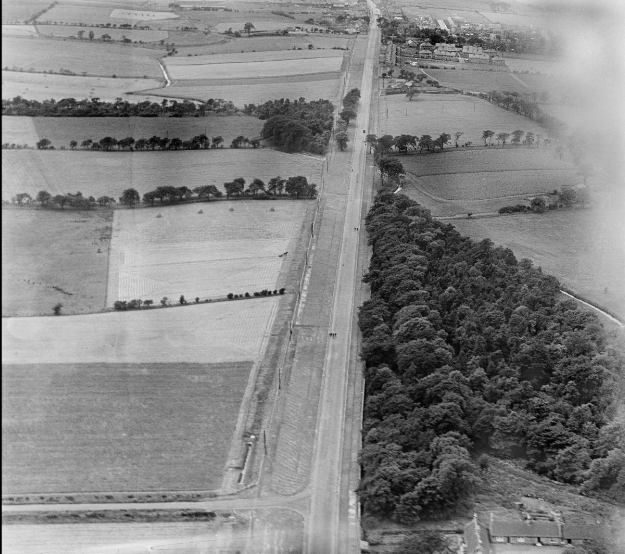
If you’re ever visiting Polkemmet Country park on the far Western frontier of West Lothian. Just about a Mile West of Whitburn, there’s plenty of Historical sites to be seen. The park itself which was Once the garden of the grand Polkemmet House, home to the Baillie dynasty. Although the house itself is gone, the stables and part of the house still remains and is oozing with history.
However, If you take a wee walk alongside the Almond water which runs right through the Old estate, towards the Western Edge of the park, you may find another little lost historical Treasure. Deep in the woods, situated over the river, are the remains of the Old Dumback Mill.
The Remains of Dumback Mill Today
Although theres not a great deal of the Mill left standing today apart from Its foundations, the weir across the water and a few peculiarly Interesting remnants of some Old stilts or posts that have been driven Into the river bed to create a sturdy wooden base for a wooden structure. I cant find any photos of the Mill from when it was still in use as it closed down a few decades before the camera made it’s debut.
But It’s very likely the Mill had a structure partly made of stone and the rest of Wood. So, these little stilts would have doubtlessly been part of the Mills structure. Probably some sort of walkway of Jetty by the waters edge. Or perhaps the supports for the actual mill itself which would have been mostly wooden.
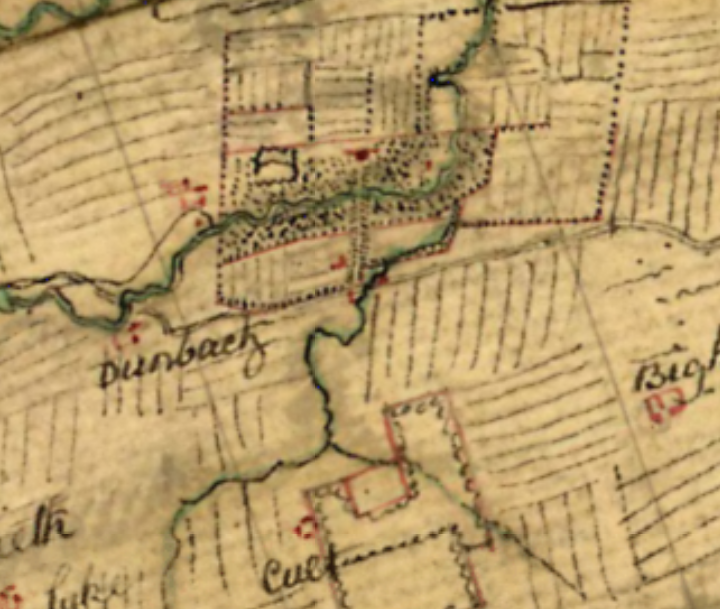
How did it work?
When you look at the waterflow of the Almond as it trickles of the weir of the old mill ruins, you can see how the waterflow has changed over time. Back at the time of the mill being in Operation, the water would have been deeper and faster flowing.
Many of these mills would have a ‘Lade’ to channel the water and harness its pressure.. This was a hand dug channel of water coming off the main stream and re-joining it further down stream. The water wheel of the mill would sit upon this lade and let the water pressure turn it as it rushes by. The wheel of course would have turned the cogs that work the machinery within the Mill.
Much like Windmills which there would also have been a lot of in the area. Especially across the waterlogged areas such as existed in the strip of land to the South of Bathgate. This was In fact, formerly a prehistoric lake. Before the ‘Lowland Clearances’, the Lowland areas of Scotland were well populated by Flemings and Dutch settlers who would have doubtlessly found the low lying and watery terrain, as it was at before the 18th century, akin to their homeland of Flanders and the Netherlands.
The Industrial Waterfront
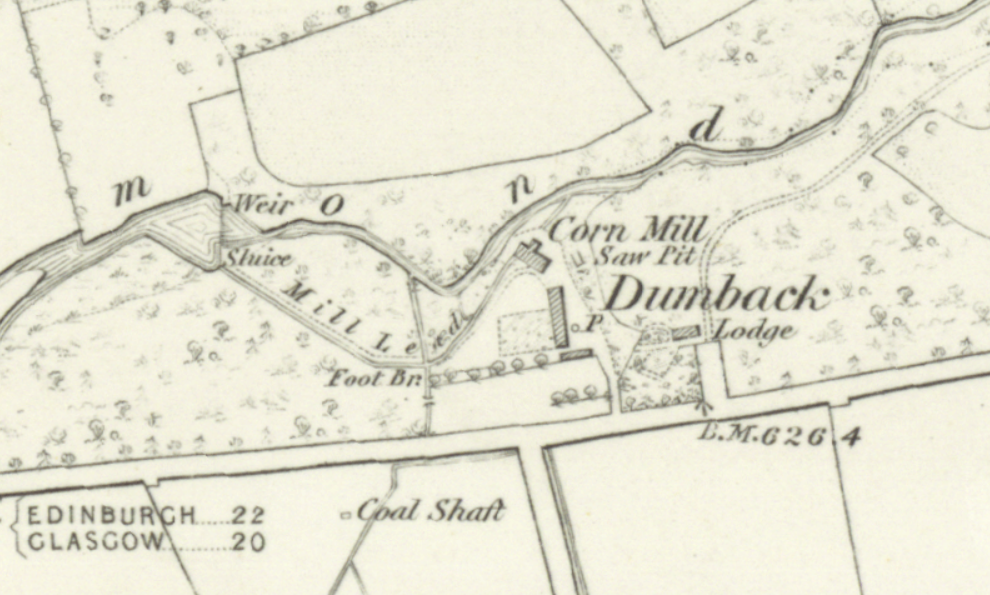
The Mill is said to have closed down around the 1850’s with It’s last known resident being a Mr William Miller. Dumback is the Almonds Second furthest upstream mills, with only the Sideheads Textile Mill being situated further upstream. Back in the 18th and early 19th century, the River Almond would have been buzzing with industry. It had over 33 Mills along its Itinerary through west Lothian.
Most have long since closed and vanished. Although still a few, like Dumback here, at least still show some remains that mark it’s past existence. However, recent efforts to restore these Mills and preserve their stories can be seen at the Livingston Mill. This has been restores, reopened and runs as a community Mill. A kinda cross between a Museum and community centre.
But if you’re over the Black West of West Lothian, It’s well worth a trip to Polkemmet Country park. Apart from the place being packed with history, It’s also a great place to relax, go for a walk in the woodland, or even half a round of Golf. Or skelp a few balls on the Driving range. Theres also plenty of fun things for the Kids, Including an adventure Playground.