
When we look at Old maps from a few hundred years ago, we often see places marked upon it that still exist today as farms. Some of the modern towns we now know were marked as around the same size or in many cases, didnt exist at all at this time. But some of these Old settlements are long gone, although some still show remnants of the past. One such place is the medieval village of Bells Town.
The Changing face of Bells Town
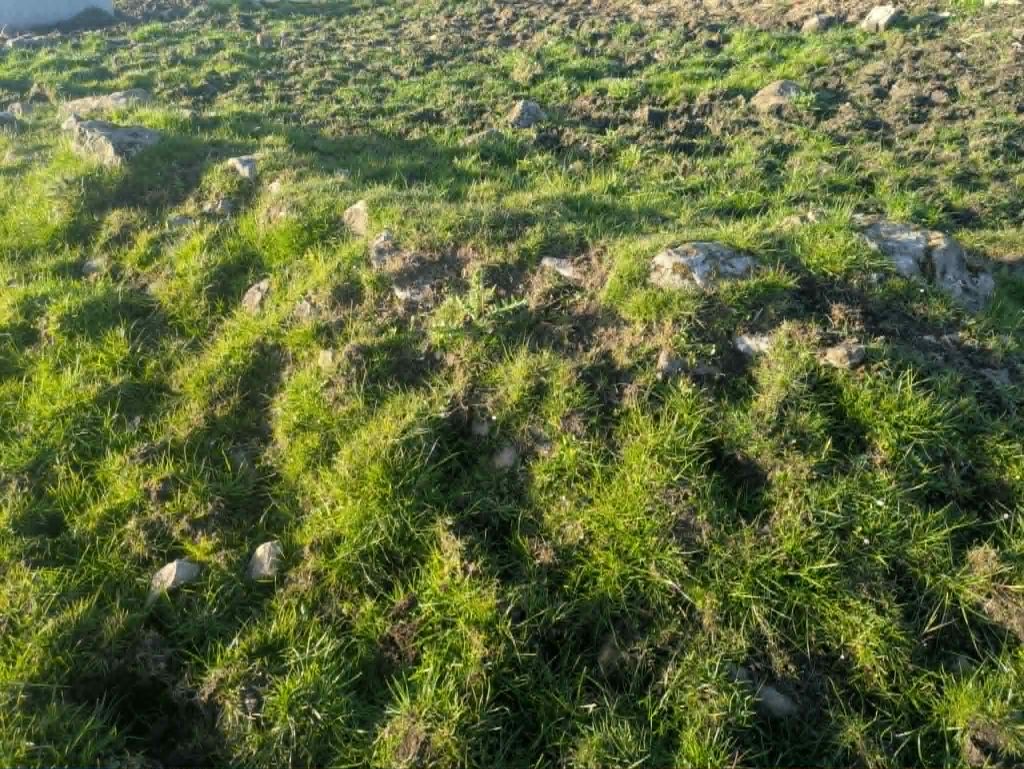
The site of this old medieval village of bells Town lies just about Half a Mile south of the perimeter of what is modern day Whitburn. Although, when this was still an operational village, the tiny settlement of Whitburn, which was probably about the same size as it if not smaller, would have been a well over a mile away. Back then Whitburn was no more than a few buildings along the Turnpike road around what is now Whitburn Cross.
But you see, back before the 18th century, the layout of West Lothians places was much different than today. Unlike todays layout where you have the bigger towns with a few small satellite villages with farms dotted between, then population was far more spread out. Most of the places we now see on the map as farms, would have been their own villages back then, with very few big towns, none anywhere near the size as the average West Lothian town like Whitburn is today. Instead you had lots of little townships of around 50 or 60 people and a small area of land surrounding it. This land would have been farmed collectively by these communities.
But that all changed in the 18th century with the Agricultural revolution and the Lowland Clearances that followed. Then later, in the 19th century, the area experienced another turbulent population shift. So, needless to say, the site of Bells town and its surrounding lands have changed a great deal since its hey day as a village.
The Medieval Village
If we take a look at some of the Old maps from around Three centuries ago, we can see Bells Town marked upon it clearly. In Roy’s 1847 Map of the Scottish Lowlands, we can see the place name ‘Bells Town’ marked there just a few hundred yards to the North, North West of Black laws, which is still an operational farm. A few Hundred yards to the Immediate West is Bickerton Hall. This is now also a modern day farm which has swallowed up the lands of bells town, Blaeberry hill just a few hundred yards to Bells Town’s North on the outer edge of Whitburn today.
Just a few yards to the Villages South, lies the Bickeron burn which would have no doubt been wider than it is today. We can see on a few old maps that there was a Ford here where travellers on the road between Blacklaws and Whitburn, through Bells Town could cross. Very little is actually known about the village and what its main business was. But theres a good chance wit it being so close to the ford, that it would have something to do with it.
Belstone Farm
Now, If we take a look at some of the later maps from into the late 18th century and throughout the 19th century, we can still see the settlement. however, It seems to have changed Its name slightly to ‘Belstone’. By this time, maps were becoming far more detailed and we can see the Outline of the ‘L’ shaped building. It seems that by the early 19th century, the village of Bells Town had been cleared out.
Its lands would have been levelled and turned Into the modern style fields we see today. These fields wouldnt have needed a whole community to farm them. So, the landowning nobility would have kept just one family to manage the estate as a farm and no longer a village.
The Bovine Banqueting Hall
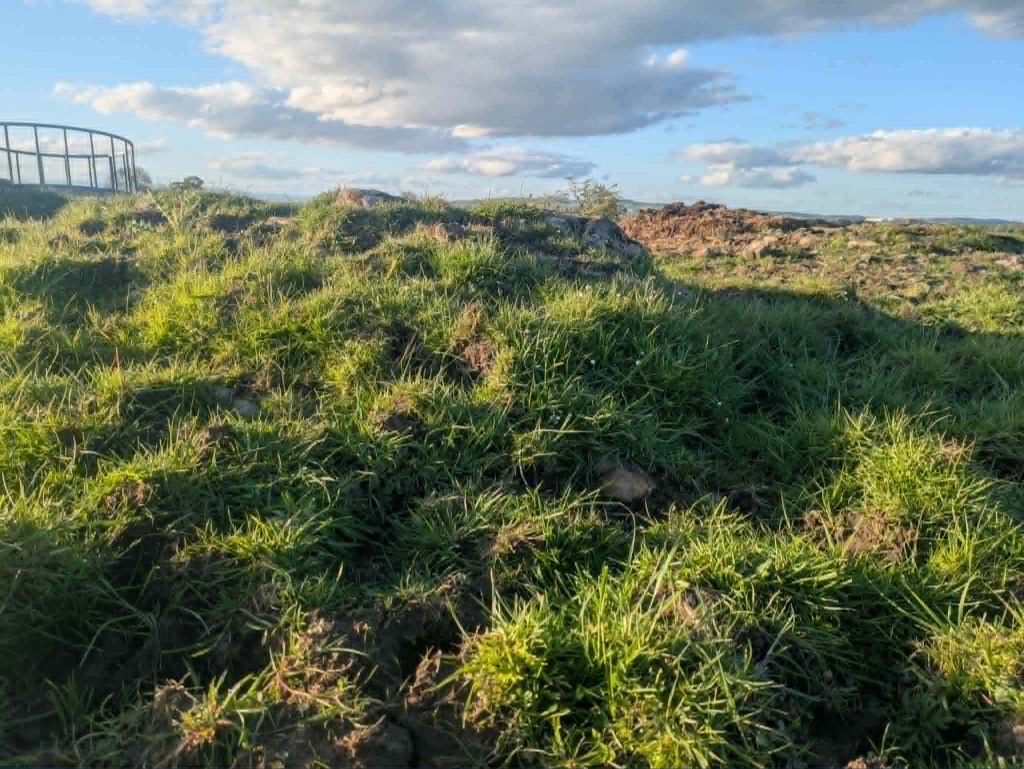
If We visit the site of Bells Town today, we can still see the remains of the Old stone House right there. Although, It must be said, the ruins arent very big. But they mark the spot vividly. But right on the site of the building stands a Cow feeder and whats lewft of a couple of piles of hay.
Judging by the fact theres no shortage of Cow hoof printxs trodden into the ground all around would Indicate that this One time human settlement is now used as a Grub stop for the cattle. A bovine banquetting Hall. You can still see the ‘L’ Shaped building. Not only the outer wall. But you can also see where each of the partition walls have been too.
According to most of the later maps from the 20th century, we still see the buildings marked clear, only nameless. It’s highly probablye that this is due to the Farm of Belstone having been swallowed up by the neighbouring Bickerton hall farm. The building seems to have stood as a ruin for a long time before gradually reducing to its current day state. Possibly used between times as a shelter and feeding station for livestock.
Repopulating Bells Town
It’s great to visit these places and still see the marks of bygone ages, albeit small sometimes. But small as it may be, It’s always a shame to see historical sites like these being completely wiped from the face of the earth. sadly though, It seems like this is what the Future holds for Bells Town. If not the ruins themselves, then at least the land around it for sure.
According to West Lothian Councils planning department, the town of Whitburn is set to expand once again.
This time to the South, over the ‘Bickerton Crofts’ area on which the ruins of the old Farm house and the historic site of Bells Town is situated. The proposed 1000 home development is Intended as a ‘Rounding Off’ of Whitburn to the South to balance out the development of the Town in conjunction with the recent ‘Heartlands’ development to It’s West.
The Full circle
When we look at the timeline of Bells Town, It’s rather strange to see it do a full circle over the past 300 years. Originally a busy little Village throughout the Middle ages, It later became a working farm. Then It was swallowed up and became a cow feeding point for the livestock of the neighbouring farm that bought it outt and swallowed it up. now, It’s set to be repolulated by humans again. Only this time, in a much bigger, spread out housing project.
I think It’s always a shame to see Old historic places like this being buried and wiped from the landscape. But I guess thats just ‘Progress’ and on a scale of things, the site of Bells town isnt exactly West lothians grandest historical landmark. But a historical landmark all the same.
The last dying remnant of an ancient Ferme toun from a long bygone age from before the Lowland Clearances. Maybe they’ll preserve the ruins themself and build around them. Thus preserving another of West lothians many historic sites that are so often overlooked and forgotten.