
Polkemmet Moor has always been a place that has been dear to me ever since I was a Child back in the 1980s. It’s a place where, despite the dire warnings about the dangers by the adults, I was always fascinated with the place and loved to explore it. This was due to the areas Post Industrial landscape, rich history and hidden secrets like that of the Lost Village of East Benhar.
The Lost Village of East Benhar
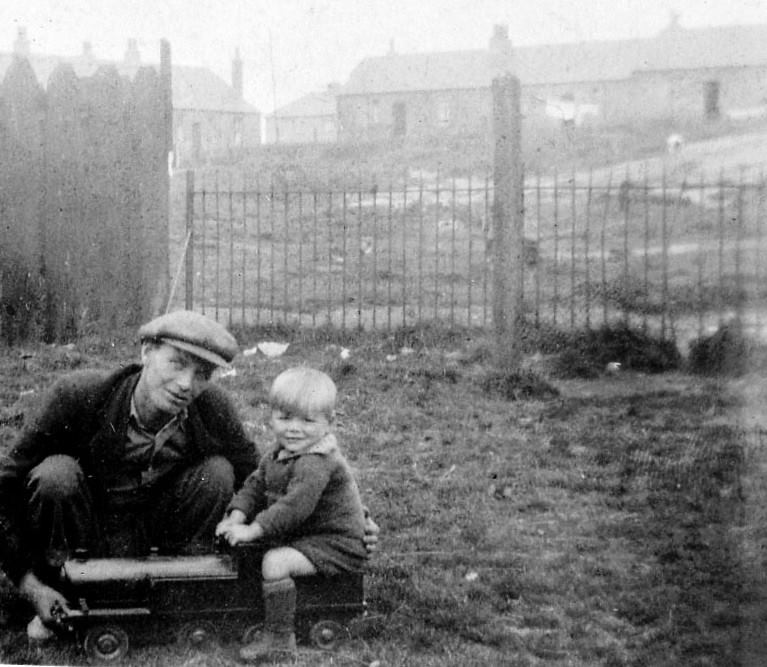
If you’ve ever travelled between West Lothian’s Village of Fauldhouse in the far South West corner of West Lothians Black West, over Polkemmet moor to Greenrigg. then you would have most certainly passed through the village of East Benhar. Although, you would have probably never noticed it.
This is because the Village is completely gone now except for a few ruins which is mostly buried amongst the thick coniferous landscape that now carpets this area of the Moor. This is not to mention the Bing that now covers most the Streets that was Once the main bulk of East Benhar Village.
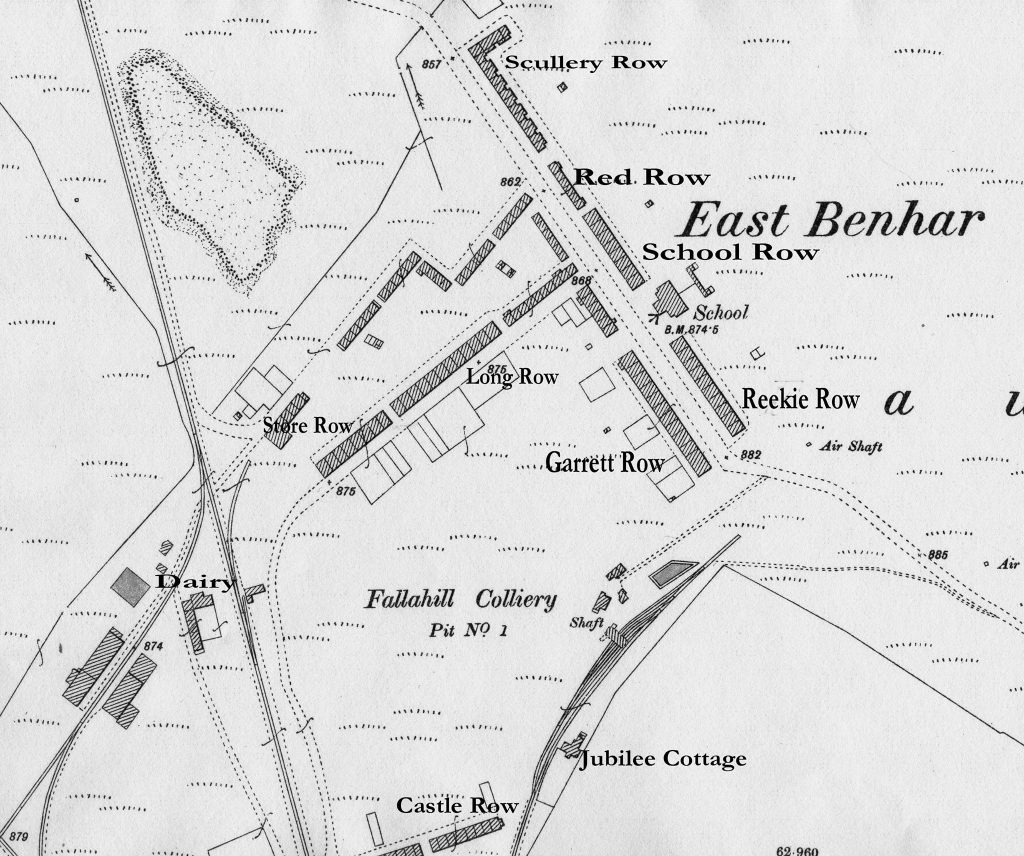
But a Hundred Years ago, this little village was a bustling little place with around 160 houses where almost a Thousand People lived and worked. It also had a main street with shops as well as Public buildings like its Bar, Miners Welfare Hall and School. East Benhar is Indeed another Once thriving village that is now all but vanished.
The History Of East Benhar
The Watershed that is Polkemmet and Fauldhouse Moors that lies to the Far West of West Lothian. It reaches into the East side of North Lanarkshire and has always been an area rich in Minerals. Especially Coal – The Black Diamonds. When the early Coal mining Industry started mining the area in the early Nineteenth century, they dug small pits. They were First engineered in the Blantyre and Govan Coal fields by a Northumbrian engineer William Dixon. These became famously known as ‘Dixon Pits’.
These holes were big enough for about 15 men to climb down into and mine coal. Theyd then lug this coal out on their backs as the pits were only shallow. Once the company had extracted what coal they could get from these pits, theyd start another. As a result, the area had hundreds of little pit holes which would later end up buried by the spoil of the next pit.
However, come the 1850s, most of the Big mining companies had started pioneering “Deep Shaft mining”. In 1851, George Simpson, a Coy Coalmaster and Entreprenuer in the area did Lease the 160 acre stretch of Moorland on the West of polkemmet Mor that would become the Benhar Coal Field from the Duke of Hamilton.
A Company Town
In 1855, the Benhar Mining Company decided to Invest in the building of a village for their workers. This was a mining Village in its raw from. It wasn’t just a village where the residents were Miners. But it was built and owned by the Mining Company, as were most villages like this back in the Mid 19th century.
Residences in these mining rows came with the job. If you lost your job down the pit, you were out and there was no Welfare State back then as a safety net. You’d had it. Unless you found another job. But these mining companies kept Blacklists and if you were sacked from one pit, it would be very hard to be taken on elsewhere.
It was only half a century before East Benhar was built that Slavery had been abolished in Scotland under the Thirlage acy of 1799. Before this time, miners belonged to the Company they mined for. However, this new found freedom wasnt an easily won attainment. Many of the miners living in these hellish company villages were debatably worse off than they were as serfs. Now the company still owned them by the payroll but had no responsibility for their wellbeing. These were not pleasant places to live. But Instead, they consisted of hardy people with a will to survive these times of early liberty.
The School
For a Village like East Benhar at a time where there was little empathy between the rich and poor, it was very lucky to have it’s own school. Back in these days, the common attitude of the middle class colliery owners would have been “Why do these people need schooling? They’re only gonna end up below the ground digging coal anyway”.
Most Children back then became adults at age 14. Many Kids a lot younger were sent down the pit to do the less physically demanding jobs. Like running messages, looking after the pit ponies that were used ton pull the coal up to the surface. This was before the introduction of modernisation and machinery in the pits and jobs of the like. So the Idea of schooling these kids, to some was
No Place for the Feint Hearted
Let’s make No Mistake about it. East Benhar Village was a hard little Town indeed and was certainly No place for the Feint Hearted. But these were hard times and came with it Hard people. Many of the residents who worked the mines across the central Scottish belt would have been incomers. Theyd have mostly come from the Highlands, Ireland, Poland, as well as the Baltic and Balkan States. This was the age of the Industrial revolution. The fast advancing Coal and Shale mining around the area brought people from all over. Miners who came in search of work and a better life. So these were already hardy people.
Yet even at that, the times brought so much added hardship as a result of Low wages and poverty. Bad living conditions and the pioneering of New Technology which would often be at the expense of lives and limbs due to the danger these new Industries brought with them. The loss of life caused by mining accidents and explosion was commonplace in these times and many miners from the East Benhar would become casualties of these disasters. Many losing eyes and limbs and often their lives. Tough places in Tough times Indeed.
When Times got Tough
Like many of these types of villages of their time, they came with No shortage of casualties and disaster. Accidents down the pits were common occurrence. Disasters were quite regular. Living in these places back in those times, this was just everyday life. If we take a look at the old records, we see no shortage of suffering.
An excerpt from a 1915 article in the Lothian Courier, highlights an Industrial Tribunal at Linlithgow Courts. It explains how One miner from East Benhar suffered a smashed skull when a bogey came off the rails and struck him. The court heard how a Doctor was summoned. The Doctor examined the man and realising he was almost a goner, ordered an ambulance to come and take the man home. He was “expected to die any day now” and his Widow to be was granted the sum of £15.
Enough was Enough
By the Mid 1930’s, East Benhar had become seriously dilapidated with a high case of poverty. So in 1936, the local Council were forced to step in to help resolve the problem. As a result, the luxurious houses of the Lanrigg Area of Fauldhouse were built to accommodate the East Benhar residents and the village was subsequently evacuated.
Compared to the slumlike miners rows of East Benhar, these new houses would have seemed like palaces. Fresh running water, Coal fires with back boiler systems to heat the whole house. With multiple spacious rooms. It even had an indoor toilet. This was a luxury for the working class back in these times. At this time, places like the Gorbals in Glasgow were still accustomed to single ends.
Buried
After the evacuation of the East Benhar village in 1935, they didnt just demolish and clear the village. It was instead buried. In 1936, the Benhar Mining company opened up a new pit – East Benhar. The Pit head was situated close to the main street on the south side of the village. The spoil pile, or “Bing” was dumped on top of the abandoned streets. thus burying an entire village and its history under a pile of excavated aggregate.
I think its quite amazing just how commonplace things were back in these days. There were many residencies that would later be turned into pits and buried in spoil. Probably the most famous of these was Westwood house which lies buried below the Five Sisters Bing near West Calder. Perhaps thats why it shines so bright today on the horizon. Maybe it was a kinda lucky charm. There was doubtlessly no surplus of Ten Bob bits around at the time. But there was no shortage of old houses waiting to be dealt with. Who knows?
But I wouldn’t be at all surprised if there was an element of truth in this. Especially considering only a century beforehand, farmers were still up offering prayers in return for good results. Science was still relatively new to the people of West Lothian. But if nothing else, it certainly made for good business. Afterall, why pay for time and labour to dispose of all that rubble when you can just sweep it under the carpet by burying it.
East Benhar Today
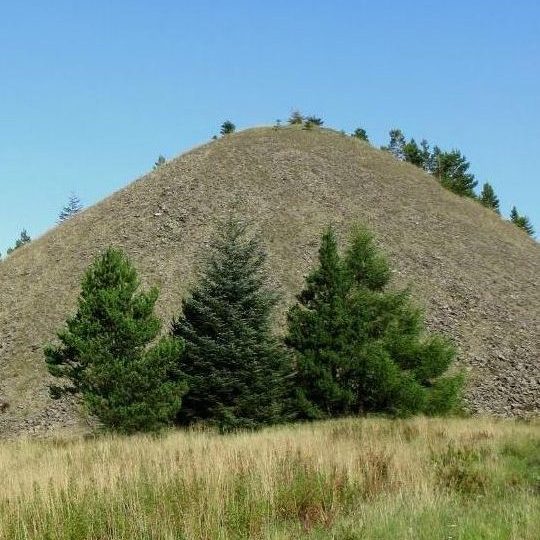
When you drive over the moor on the Harthill to Fauldhouse road, you will drive along the existing main street of East Benhar. But unless they were already aware of this lost village’s past existence, you’d never know it. One could be forgiven for being completely oblivious to the fact there was ever any village there. Instead, the remnants of the short lived East Benhar Coal Pit are far more visible than any remnants of the village. This is also partly due to the thick coniferous woodland that covers the site. This has been planted around this area since the demise of the village and the moors mining endeavours.
But there are still a few remaining ruins of the village there to be seen if you know where to look. The most prominent of these is the Old East Benhar School. Set back from the road on the East side, the ruins of the school still stand, albeit not very high. Most of the walls have been reduced to only Two or Three Feet high and surrounded by Scrugg and Moss.. But there are still a couple of rooms that still stand about 10 feet tall. The doors and window spaces are still prominent.
Remnants of the School
I remember playing up there as a kid in the late 80’s and stumbling upon the school. Of course, back then I had no idea about the lost village of East Benhar so I’d no Idea what the ruined building was. But I seem to remember it being much bigger with all the walls intact. I don’t think the roof was on it at the time but the walls were still their full size. Hopefully what’s left of these ruins can be preserved. So that future generations may still see the very little remains of what was Once a thriving little mining village.
What does East Benhar Mean?
So, when we look at the history of places like East Benhar, we have to ponder what it all means. Is such a hellish predicament of human struggle and suffering a past to be dug up? Is it perhaps not a part of our heritage best left buried under that pyramidical Bing pile? Well, I would think not. I think it’s Important to keep these places in remembrance. They are indeed a record of a time gone by that was so significant. Not only to Scotland, but to the entire world’s future.
East Benhar stands to represent an age where the world was changing rapidly. The Industrial revolution and all the pioneering that was done in West Lothian would go on to spread overseas. In America, the Appalachian mountains were notorious for towns like this. They were often very tough with the mining companies very aggressively against any workers who didnt tow the line, shut up and put up. It took a while longer over there for trade Unions to be able to organise enough to get humane working conditions and laws to back them.
But East Benhar was One of the First of these ‘Work Camp’ villages that sprung up throughout the Nineteenth Century. West Lothian alone has over 20 of these Lost Villages. These were the original company towns. Whilst many of them have completely vanished, some of them like Pumpherston and West Calder still survive today. Some, like Westwood and Addiewell have gone with new villages of the same name being built in their place in later times. But many others have just joined up with each other to form many of West Lothians modern towns today.