
When we think of the First of the global oil industries, we often think of the sprawling deserts of the Middle East or the dusty plains of Texas. But, for a brief window in the Nineteenth century, the worlds ‘refined oil’ capital was actually located in the cold, windswept lowlands of Scotland. This dominance relied entirely on crushing and cooking solid rock rather than pumping liquid crude oil from the sand. This process was so intensive, it conjured a whole Industrial town, right out of thin air. This Industrial town were talking about here was the village of Pumpherston.
Pumpherston – A Boom Town
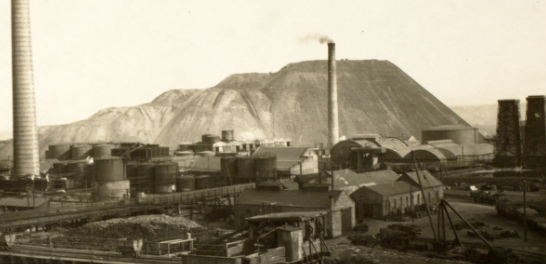
Before 1850, Pumpherston was a quiet, agricultural estate. It drew its name from a Twelfth century Flemish nobleman -Pumphrey’, and for Seven hundred years, the land was defined entirely by farming. But that all changed when a chemist from Glasgow named James Young figured out how to extract oil from coal. He realised that by heating the locally mined shale, often known as ‘Boghead Coal’, ‘Cannel Coal’ or ‘Torbanite’, he could distil it into Paraffin.
At this time, the world was desperate for cheap sources of Light and Fuel. Young’s discovery triggered a Land grab as Dozens of prospectors teared into West Lothian to tear up the countryside for this shale. Then, in 1883, the Pumpherston Oil Company Entered the fray. They operated with enough efficiency to rapidly buy up and absorb their smaller rivals. They quickly became the largest single concern in the Scottish Shale Industry.
The ancient agricultural Estate was completely consumed. The Land, the rock beneath it and the people who lived there became the raw material of a corporate empire. In 1894, the company patented the specific engineering that would allow it to outpace every competitor.
The Pumpherston retort
These were towering cylindrical vessels, standing a staggering Thirty Five feet tall. The upper section was forged of solid Iron, whilst the lower half was constructed from Heat resistant fire bricks. Raw shale was dumped into the top where the Iron section baked it at roughly 800 degrees Fahrenheit to release Shale Oil and Gas. At the bottom, the temperature was cranked up to 1300 degrees and steam was Injected to extract Ammonia. This specialized Thermal separation was so efficient that the Pumpherston design became the Industry standard. Soo, the company was exporting these massive retorts to be used for mining in places like Spain and Australia.
Feeding these machines twenty Four hours a day required a massive, unwavering human presence. To ensure that labour remained stable for such a demanding operation, the company directors extended their reach beyond the factory gates, attempting to engineer the behaviour of everyone in the village.
A Company Town
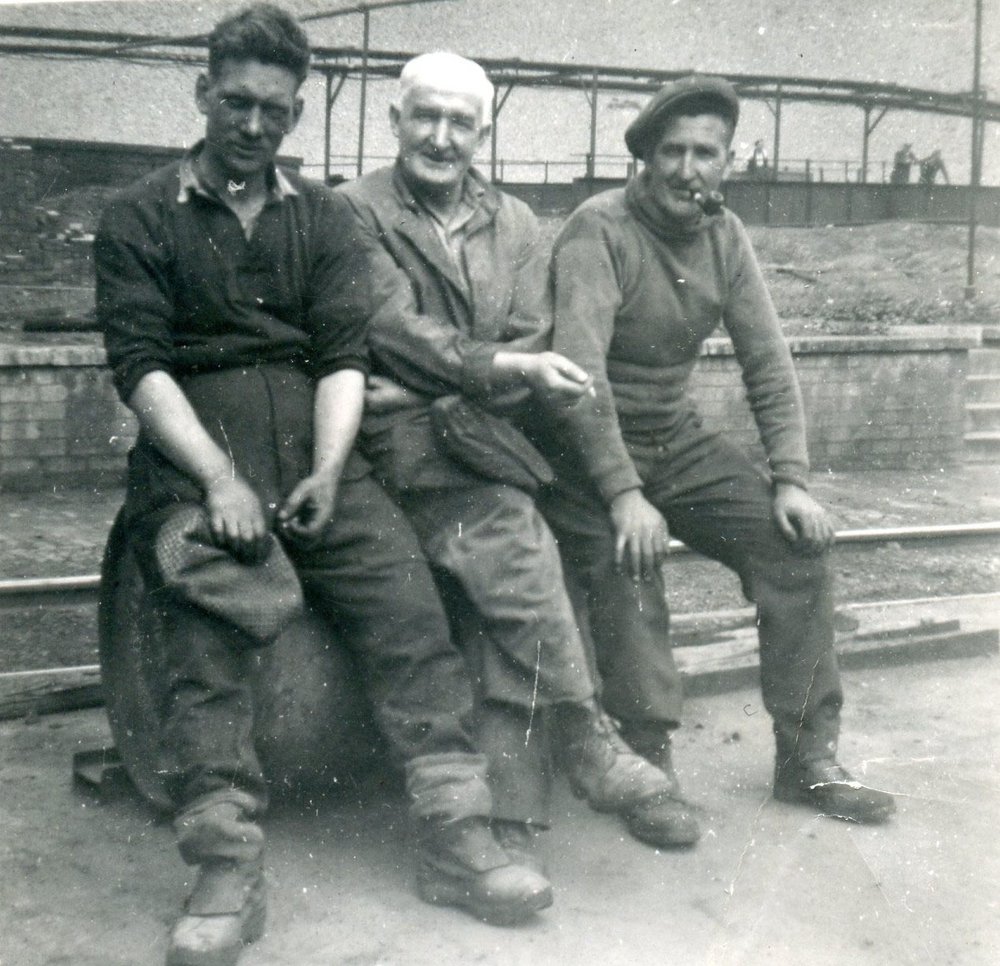
The Pumpherston Oil Company operated the village as an extension of the factory. They acted as the Landlord, the Employer and the Sole authority over local culture. The management enforced an obsessive level of uniformity. They banned pubs within the village entirely “to ensure sobriety”.
Then they demanded that every single garden shed and Front door be painted the exact same shade of Dark Green. The Corporate Works office even monitored the residents children. If for instance a local boy was caught stealing apples, the company sent a formal letter to the School Master, specifically ordering that the child be singled out and punished.
Yet, behind those fancy ornately painted Green doors, families of around Five or Six squeezed into those little crammed houses. In order to afford the rent, these residents would often take in additional lodgers, sharing outdoor privies and public ‘As Pits’ for their waste.
But reality below ground was even harsher. Men and boys spend long hard shifts in cramped tunnels. They would be working alongside massive Pit ponies to haul heavy Iron hutches of raw shale all the way up to the surface. The company directors used the residents exactly as they used the rock they mined. As a resource to be processes and managed for maximum yield.
The decline of a Boom Town
This system ran profitably for decades. But, in the 1920’s, prospectors in America and the Middle East began tapping massive reservoirs of liquid crude. Pumping liquid straight from the ground was far cheaper and more efficient than mining and cooking solid rock. Unable to compete on price, the local crude oil works became economically unviable and closed down in the late 1920’s.
The main Pumpherston refinery survived a few decades longer by processing Imported oil and was producing synthetic detergents. But it ultimately closed its doors for good in 1964.
The process left behind Millions of Tons of mineral waste. Piled into massive Red Pyramid looking hillocks called ‘Bings’, the structures would rise up to ninety metres above the surrounding fields, marking the footprint of the old works. It also left behind an existential problem. When a corporation builds an entire town , failing to extract a resource and that Industry vanishes, how does the community left behind it survive?
A Strong Community
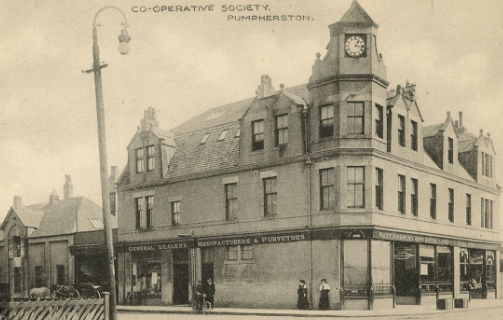
However, the residents didnt wait around for the company to face them. Long before the mines had closed, the miners had pulled their resources to establish a worker owned, Co-operative Society Store, thus creating a safety net for their families for during hard times like strikes and depressions. Led by a delivery man named Joe and his horse, this Co-op expanded rapidly.
By 1910, the workers had financed a sprawling, three storey village centre of their own, complete with a bakery and an Imposing clock tower which still stands today. They built their own cultural Institutions too. In 1896, the employees formed the Pumpherston Juniors Football club. Financed and supported entirely by the community, the team continued to play on a pitch, famously known as One of the largest in the league.
Pumpherston was originally drawn up as a line item on a corporate balance sheet. But it’s true history is found in it’s fiercely independent community that outlived the empire that built it.