Okay, so anyone who knows anything about Scotland and it’s history has at least heard about the Highland clearances. I mean, hast everyone? Soo many history books, movies and songs chart the eviction of the highlanders. How the people it drove off their homesteads would go on to fuel the Industrial revolution either this side of the Atlantic or the other. But, its not just so often that we hear about the ‘Lowland Clearances’ of Scotland throughout the previous century of the 1700s.
Situated right in the Scottish Lowlands central belt, West Lothian was no exception to this massive shift in land occupancy, power and economy. In fact, West Lothian was One of the areas to be affected very dramatically throughout the Eighteenth century. Once an area peppered with thousands of little ‘Fermetoun s’, in just a few decades became an area of empty space and bustling towns.
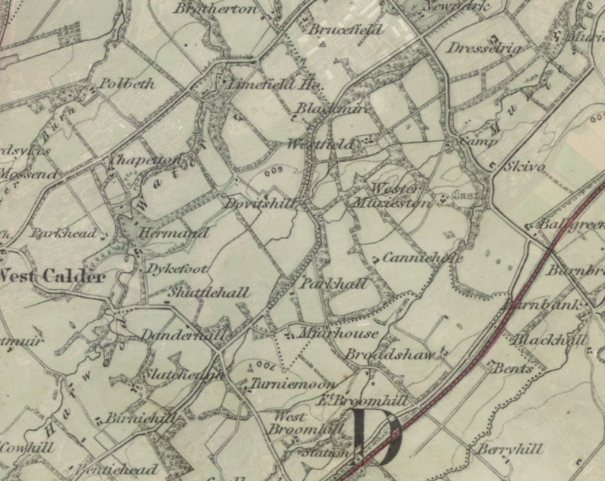
Have you ever looked at the history of your town and seen that it existed on Maps way back in medieval times? Yet, when you try find out more, there seems to be a blank in information until the late 18th century where the records start becoming clearer, especially throughout the following century
When it comes to Information on West Lothian throughout the Industrial revolution of the 19th century, there’s no shortage. But what about before that? what did the people around here do before that? I mean, the place was on the map so there was definitely people here. They must have done something. But why cant we find much?
Well, you see, this is because the entire Lowlands of Scotland underwent a kind of Purge known as the Lowland Clearances. This vast movement of people would go on to reshape and reinvent Scotland. But Firstly, let us take a look at how this great people shift came about.
At the turn of the 18th century, the only people who had any sort of knowledge for farming and agriculture were the peasant farmers who worked the land. The Land owning nobility were happy enough to collect their rent share from the Fermetoun communities upon their land. But they had no actual interest in such manual work. It was below them.
Instead, the land was worked by Communities of around 50 to 60 people who all worked the land collectively. These Fermetouns can often still be seen on the map today but as farms, not villages. But prior to the 18th century, they can be seen on the map as villages. The land was divided into strips of Rig and Furrow lots where everyone had their own little strip of land to cultivate, learning from their ancestors in the oral tradition. Many were still offering prayers at Holy Wells for a good harvest each year.
But when the Scottish Enlightenment came along, many of the nobles sent their sons to university where they learned about agriculture from a more theoretical and scientific view. This would change not only agriculture, but the entire landscape and population of Scotland forever.
These new young gentlemen farmers quickly put their knowledge into action when they returned to their estates. They soon levelled their lands, sweeping away the ‘Rig and Furrow’ strips completely. They would replace all these little patches with large square and rectangular fields. The same fields that we see today. Fields bordered by drystone walls or hedgerows of trees.
It’s easy to see these fields and presume that’s how farming has always looked. But in reality, its not that old of a method. Before the late 1700s, the entire area of West Lothian and the Scottish Lowlands looked completely different. Not only the fields themselves. But the entire landscape and population was different back then. Until this ‘Great Improvement’.
With such dramatic changes to the landscape of these estates, it consequently affected the lands irrigation which in turn altered the surrounding lands. For example, the improvements done on the Cult Estate to the West side of Whitburn, effectively dried out the long strip of boggy marshland to the South of Bathgate. So much so, that some 80 years later, the land was dry enough to dig for Iron and Coal. Instead they found the unique mineral Torbanite. Named after the Torbanehill estate it was discovered on. The very First form of Shale Oil and Ultimately Petrol.
Of course, all of these vast land overhauls were mere gardening projects. They were businesses and profit is what mattered to the landowning nobility who had taken a recent interest in their lands. With these vast open fields, it no longer took an entire community to maintain and work. They could be managed by a single tenant farmer and their family. So most of these little Fermetoun communities were converted into what we now know as modern day Farms. One single tenant farmer to manage what was previously work for 50 or 60 people. That’s quite a ratio to cut.
So what about all the rest of the community? They were all moved out and the cottars dismantled and recycled into field walls or stables and farmstead buildings. However, unlike their better known Highland Counterpart, the Lowland Clearances was a far less forceful and bloody affair. Most moved by their own free will. Usually the coercion by offer of employment was the way.
Some of these people made their way into the bigger, fast growing towns of Glasgow, Edinburgh, Dundee, etc where the Industrial revolution was just starting to take off. There they would find work in the numerous factories and Mills. Others made their way into some of the local surviving Weavers villages like Whitburn which were starting to grow into industrial towns. But many of these people took to overseas and settled in the New world countries of New Zealand, Canada and the States. Here they’d soon be joined by their Highland Counterparts in the following century.
However, the timing of these clearances happened to coincide with the start of another era, the Industrial age. With that Industrial boom came the discovery of Coal and Shale mining which brought repopulation to West Lothian. AS many of the Lowland residents were shipping out, others were shipping in. As many of these mining rigs popped up all across West Lothian, with them came residential company villages. Brick mining rows, usually comprising of One room, a fire and no water.
Many of these villages sprung up throughout West Lothian and some still exist as part of bigger modern towns. But many of them were lost again and remembered only in record and Map. Lost villages like East Benhar, although mainly buried under a Bing, the remnants of the Old School can still be found. Though some, like Starlaw are completely gone and covered over by modern road infrastructure.
People came to work these Pits and Chemical works from all over Europe and Ireland as well as locally and as time went on, from the highlands. So, in the space of a Hundred Years or so, the population of West Lothian underwent a major change. So too did the Towns and Villages. Before the Lowland Clearances, the Lowlands of Scotland was heavily populated with Flemish and Dutch settlers living in a mixture of Hilly Heath and Boggy Marsh peppered with lots of little villages. It would be replaced by vast open unpopulated spaces with a few bigger towns with a whole new populace.
So, when we look at the map today and see a handful of Towns and vast open spaces, look a little closer. Throughout those vast open spaces you’ll see farms on the map. Now Imagine those farms were little villages. That’s a rough Idea of what West Lothian looked like before the Lowland Clearances. Many of these settlements that we see on the map today as farms were in fact thriving little Fermetoun communities. Many of them were bigger than the existing villages that we see on the map today as prominent West Lothian Towns.
One example is the old Fermetoun of Bells Town just about a mile South of Whitburn. In the late 17th century when Whitburn was nothing more than a few Weavers cottages on a crossroads, it was a prominent little village. By the early 19th century, it was a farmhouse. Today its a ruin. Yet Whitburn is fast becoming One of West Lothians biggest Towns, swallowing up the area that once was Bells Town.
But since these villages were all mostly agricultural communities, very few residents read or wrote. Back in those days it was really only the nobility that learned such fineries. So, as a result, we don’t have a lot on record about the coming and goings and everyday life of these villages. So, it’s not that there was nobody around West Lothian back before the 1700’s. There was. It was a very well populated area which would have been really busy and vibrant with life and work.