
East Calder is a small town on the East side of West Lothian, in the heart of the ‘Red East’ of the shire. Sitting upon old Edinburgh to Irvine Turnpike, lies a village with a rich, multifaceted past that mirrors the broader historical shifts of the Scottish Lowlands.
The History of East Calder
From its ancient Celtic roots and medieval religious significance to its booming industrial era and modern rebirth, the history of East Calder is a captivating tale of endurance and transformation. Whether you are a local resident, a history enthusiast, or a prospective visitor, exploring the heritage of East Calder offers a unique window into Scotland’s vibrant past.
Early Beginnings and the Origins of the Name
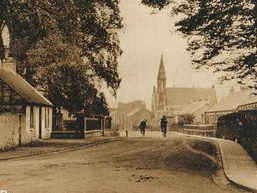
To truly understand the history of East Calder, we must first look at its name. The word “Calder” is of Brittonic Celtic origin, generally believed to mean “hard and cold water” or “wood by the water.” This reflects the village’s geographical setting near the River Almond and the Linhouse Water, surrounded by ancient woodlands that once blanketed the Lothians.
For centuries, the area was simply part of a larger district known as Calder, which eventually fractured into Mid Calder, West Calder, and East Calder. Early settlements in the area were largely pastoral, with small communities relying on the fertile land and local waterways to sustain their agricultural lifestyles.
The Roman Influence and Medieval Roots
While there are no massive Roman forts directly within the village limits, the surrounding West Lothian landscape was undoubtedly influenced by Roman presence during their incursions into Scotland. However, it was during the medieval period that East Calder truly began to form a distinct identity. The feudal system brought Norman and Scottish lords to the region, establishing estates and agricultural lands that would dictate the local economy for centuries.
St Cuthbert’s Kirk: A Glimpse into the 12th Century
One of the most significant physical remnants of the early history of East Calder is the ruin of St Cuthbert’s Kirk. Located quietly within the village’s historic graveyard, these ancient, ivy-clad walls date back to the 12th century.
Dedicated to St Cuthbert, an early medieval monk and bishop of Lindisfarne, the kirk served as the spiritual heart of the parish for over four hundred years. Architecturally, the ruins showcase classic Norman features, providing a tangible link to a time when stone churches were rare, monumental additions to the Scottish landscape.
Connections to the Knights Templar
The ecclesiastical history of West Lothian is deeply intertwined with the Knights Templar and later the Knights Hospitaller, who held their primary Scottish base at the nearby Torphichen Preceptory. The lands surrounding East Calder were often subject to tithes and connections with these powerful military-religious orders.
Although St Cuthbert’s Kirk itself was a traditional parish church, the influence of these knights heavily shaped land ownership and religious life in medieval East Calder. The church was eventually abandoned following the Scottish Reformation and the subsequent redrawing of parish boundaries in the 16th and 17th centuries, leaving behind the romantic ruins visitors can see today.
The Agricultural Era of East Calder
Before the roar of industry arrived, the history of East Calder was defined by agriculture. Throughout the 17th and 18th centuries, the village was a quiet, unassuming farming community. The rolling hills of West Lothian provided excellent grazing for sheep and cattle, while the lower plains were cultivated for oats and barley.
Life in pre-industrial East Calder was dictated by the changing seasons and the agricultural calendar. Traditional stone-built cottages lined the main street, housing farm laborers, blacksmiths, and weavers. It was a close-knit community where generation after generation worked the same fields, entirely unaware of the geological wealth hidden deep beneath their feet.
The Industrial Revolution: The Shale Oil Boom
The most dramatic turning point in the history of East Calder occurred in the mid-19th century. In 1850, chemist James “Paraffin” Young patented a process for extracting oil from coal and shale, effectively sparking the world’s first commercial oil industry right here in West Lothian.
The region sat atop massive deposits of oil shale, and practically overnight, the quiet agricultural landscape was transformed into a bustling, smoking hub of industry.
Oakbank and the Transformation of East Calder
Just on the edge of East Calder, the Oakbank Oil Company was established in 1869. The opening of the Oakbank shale mine and the subsequent construction of the Oakbank processing works changed East Calder forever. The village experienced a massive population boom as miners, engineers, and laborers flocked to the area seeking employment.
Rows of brick terraced houses were hastily constructed to accommodate the influx of workers, significantly expanding the footprint of East Calder. The village economy shifted from farming to mining, and the sky was frequently dominated by the glow of the shale retorts. Huge “bings” (spoil heaps of spent shale) rose dramatically across the landscape. The Oakbank bing became a defining local landmark, a towering red monument to the village’s industrial prime.
During this era, East Calder developed a strong working-class culture. Miners’ institutes, local cooperatives, and brass bands became the cornerstone of community life, forging a resilient community spirit that survived long after the mines closed.
The 20th Century and Post-Industrial Decline
The shale oil boom that fuelled East Calder began to wane in the early 20th century. The discovery of liquid crude oil in America and the Middle East eventually made Scottish shale oil economically unviable. Slowly, the mines began to close. By the mid-20th century, the Oakbank Oil Works ceased operations, marking the end of an era.
The transition was difficult for the village. Like many mining communities across Scotland, East Calder faced a period of economic hardship and high unemployment as its primary industry vanished. However, the resilient spirit of the villagers prevailed. Post-war housing developments helped modernize the town, and its strategic location between Edinburgh and Glasgow began to attract a new demographic.
East Calder Today: A Thriving Modern Community
Today, East Calder has successfully reinvented itself. The smoky skies of the shale era are long gone, replaced by a picturesque, modern village that serves as a highly sought-after commuter town. The expansion of nearby Livingston and excellent transport links to Edinburgh have brought new life, new housing developments, and new businesses to the area.
Despite its modernization, East Calder retains its historic charm. The old Main Street still echoes the village’s past, and the community holds fiercely to its local identity, ensuring that the working-class heritage and ancient roots are never forgotten.
Exploring Almondell and Calderwood Country Park
A significant part of the modern appeal of East Calder is its proximity to natural beauty. The village acts as a gateway to the spectacular Almondell and Calderwood Country Park. Covering 220 acres of woodland, riverbank, and historical estates, this park allows locals and visitors to wander through the very landscapes that originally gave “Calder” its name. The park features historic bridges, diverse wildlife, and peaceful walking trails that offer a stark, beautiful contrast to the area’s heavy industrial past.
The Enduring Legacy of East Calder
From an ancient Celtic settlement to a medieval parish, a booming shale mining town, and a modern commuter haven, the history of East Calder is a testament to adaptation. Its ability to evolve while preserving links to its past—whether through the ruins of St Cuthbert’s Kirk, the red remnants of the shale bings, or the lush woodlands of Calderwood—makes it a truly unique part of West Lothian.
By understanding the history of East Calder, we gain a deeper appreciation for the village not just as a place to live, but as a vibrant, living monument to Scotland’s ever-changing social and industrial landscape.