
Situated right in the heart of Scotland’s central belt lies the charming, quiet village of Phillipstoun. Located just a couple of miles east of the historic county town of Linlithgow, this West Lothian settlement might seem like a peaceful rural retreat today, but its past tells a very different story.
The history of Phillipstoun (also historically spelled Philpstoun) is a gripping tale of agricultural beginnings, a massive industrial boom, and a tight-knit community forged in the fires of Scotland’s shale oil revolution.
The Fascinating History of Phillipstoun
Whether you are a local resident, a historian, or someone planning to explore the Union Canal, understanding the history of Phillipstoun offers a unique glimpse into West Lothian’s rich industrial heritage.
The Early Days and Agricultural Roots
Long before the sky was punctuated by the smoke of industrial chimneys, the land surrounding modern-day Phillipstoun was dominated by agriculture.
Before the Industrial Boom
In the centuries leading up to the Victorian era, West Lothian—then known officially as Linlithgowshire—was a predominantly rural and agricultural county. The area where Phillipstoun now stands was composed of rich arable farmland, part of large estates like the nearby Hopetoun Estate and the historic House of the Binns.
Life here was tied strictly to the seasons. The local economy was driven by farming, and the landscape was dotted with small cottages and tenant farms. Phillipstoun was barely a speck on the map, shadowed by the grandeur of nearby Linlithgow Palace, the birthplace of Mary, Queen of Scots. However, beneath the fertile soil lay a geological treasure that would soon change the trajectory of the region forever.
The Shale Oil Boom: The Birth of Modern Phillipstoun
The true birth of Phillipstoun as a defined, bustling village is inextricably linked to the Scottish shale oil industry. The mid-19th century brought an industrial revolution that transformed the very fabric of West Lothian.
James “Paraffin” Young and the Scottish Shale Industry
In the 1850s, Scottish chemist James Young discovered how to extract paraffin oil and wax from cannel coal, and later from oil shale. This discovery sparked a massive industrial boom in West Lothian. As global demand for lighting oil and lubricants skyrocketed, companies rushed to extract the oil-rich shale rock buried deep beneath the Scottish landscape.
James Ross & Co. and the Philpstoun Oil Works
The real catalyst for the village’s expansion came in the 1880s. The firm James Ross & Co. established the Philpstoun Oil Works, leasing the mineral rights from the Marquis of Linlithgow. To extract the shale, process it in massive retorts, and refine the oil, the company required a massive workforce.
Almost overnight, the landscape of Phillipstoun transformed. Deep mines were sunk, towering processing plants were erected, and massive “bings” (distinctive flat-topped hills made of spent shale waste) began to dominate the skyline. Phillipstoun had shifted from a quiet farming community to a vital hub of Victorian energy production.
Village Life During the Industrial Era
With the rapid expansion of the oil works came an influx of workers from across Scotland and beyond. To accommodate these miners, retort men, and their families, the oil company had to build a village practically from scratch.
Housing the Workforce
To house the booming population, James Ross & Co. constructed extensive rows of terraced housing. Areas like the Wester Pardovan rows and “The Avenue” were built in the late 19th and early 20th centuries. While life in the shale mines was incredibly gruelling and dangerous, the housing in Phillipstoun was relatively well-regarded for its time. “The Avenue,” built around 1910, featured superior homes with decorative features, sculleries, and attic rooms designed for the company’s higher-ranking staff.
The Institute and Community Growth
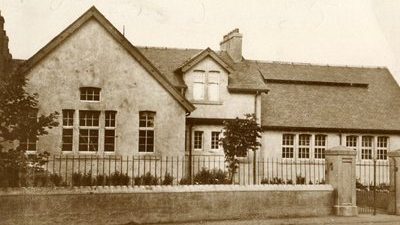
Despite the hard labour, the people of Phillipstoun fostered a fiercely strong community spirit. The oil company, recognising the need for social welfare, funded local amenities. Around 1910, they commissioned “The Institute at Philpstoun,” which today serves as the village’s Community Education Centre.
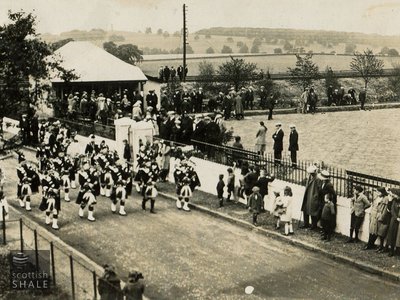
The village boasted its own bowling green, cooperative stores, and a Category B listed church. Social events, summer gala days, and village sports clubs were the heartbeat of Phillipstoun, providing a much-needed escape from the dark, dusty conditions of the shale mines.
The Decline of Shale and a New Era
The prosperity of the Scottish shale oil industry was not to last forever. The 20th century brought new global challenges that would once again reshape the village of Phillipstoun.
The End of the Oil Works
Following the First World War, the Scottish shale industry faced intense competition from cheap, liquid crude oil imported from the Middle East and the Americas. Despite government subsidies and the consolidation of local companies into Scottish Oils Ltd (which later became part of BP), the industry began a slow, steady decline. Operations in Phillipstoun gradually wound down, with the final remnants of the local shale industry ceasing entirely by the early 1960s.
Transforming the Bings and Brickmaking
One of the most fascinating historical footnotes of Phillipstoun is the attempt to repurpose its industrial waste. In 1921, the British Brick Company established a brickworks in Phillipstoun to manufacture building bricks out of the spent shale from the massive bings. By mixing the shale residue with lime and steaming it, they created a unique, granite-like sand-lime brick.
While the brickworks eventually closed, nature took over the remaining bings. Today, the distinct red hills of spent shale are a protected monument to the village’s industrial past, now covered in wild grasses, birch trees, and local wildlife.
Connectivity: Railways and the Union Canal
Phillipstoun’s industrial success was heavily reliant on its excellent transport links, which remain a key feature of the village’s geography today.
The Union Canal
Running directly through the southern edge of the village is the Union Canal. Opened in 1822 to transport coal and other goods between Edinburgh and Falkirk, the canal became a vital artery for the Phillipstoun Oil Works. Barges loaded with oil, wax, and even the local shale bricks floated along this calm waterway. Today, the Union Canal is a beloved leisure route, offering walkers, cyclists, and canal-boaters a tranquil path through the West Lothian countryside.
The Glasgow-Edinburgh Railway
In addition to the canal, the village was served by the main Glasgow-Edinburgh railway line. The Philpstoun railway station opened to passengers and freight, bringing a constant flow of movement to the area. Although the station was a casualty of mid-20th-century transport cuts—closing its doors to passengers in 1951—the railway line still hums with modern trains passing by the village today.
Phillipstoun Today: A Quiet West Lothian Haven
If you walk the streets of Phillipstoun today, the heavy smog and clanking machinery of the oil works are long gone. The village has reverted to a peaceful residential haven, tightly enclosed by beautiful arable farmland and historic estates.
The legacy of the shale boom lives on in the sturdy brick and stone of the workers’ rows, the surviving community hall, and the striking red bings that stand as monuments to West Lothian’s industrial pioneers. Modern-day Phillipstoun is a highly sought-after location. With its proximity to Linlithgow, excellent local schools, and direct access to both the M9 motorway and the scenic Union Canal, it perfectly balances rural charm with modern commuter convenience.
The history of Phillipstoun is a microcosm of Scotland’s wider industrial journey. From a quiet agricultural patch to the beating heart of the world’s first commercial oil boom, and finally settling into its current status as a picturesque commuter village, Phillipstoun has survived and thrived through centuries of change. The next time you find yourself wandering along the Union Canal or exploring West Lothian, take a moment to appreciate the enduring legacy and the incredibly rich history of Phillipstoun.