
Deep in the rural moorlands of West Lothian, Scotland, lies the ghost of a once-bustling industrial community. If you visit the peaceful shores of Cobbinshaw Reservoir today, you will find scenic landscapes, quiet waters, and nature reclaiming the earth. However, beneath the heather and rough moorland grazing lies the fascinating history of the lost village of South Cobbinshaw.
Built entirely to support Scotland’s booming 19th-century shale oil industry, South Cobbinshaw was a settlement forged by the promise of mineral wealth. Like many of West Lothian’s lost mining villages, it was built out of necessity, thrived for a fleeting moment in history, and was ultimately abandoned when the industrial boom turned to bust.
Whether you are a local history enthusiast, a genealogist tracing your Scottish roots, or an urban explorer fascinated by abandoned places, the story of this lost village offers a captivating glimpse into Scotland’s industrial past.
The Origins of South Cobbinshaw
To understand the birth of South Cobbinshaw, we must look at the wider context of the Scottish shale oil industry. This era forever changed the economy and geography of the West Lothian region, turning quiet farmlands into industrial powerhouses.
You see, before the Villages with their miners rows were built, Cobbinshaw had been put on the map with the creation of the Cobbinshaw reservoir. This was dug high up on the edge of the Pentland hills overlooking West Lothian to service the Union canal about 20 miles away to the North at Broxburn. This abundance of water and pressure allowed the canal locks to operate, using the water from the reservoir to adjust It’s levels as needed.
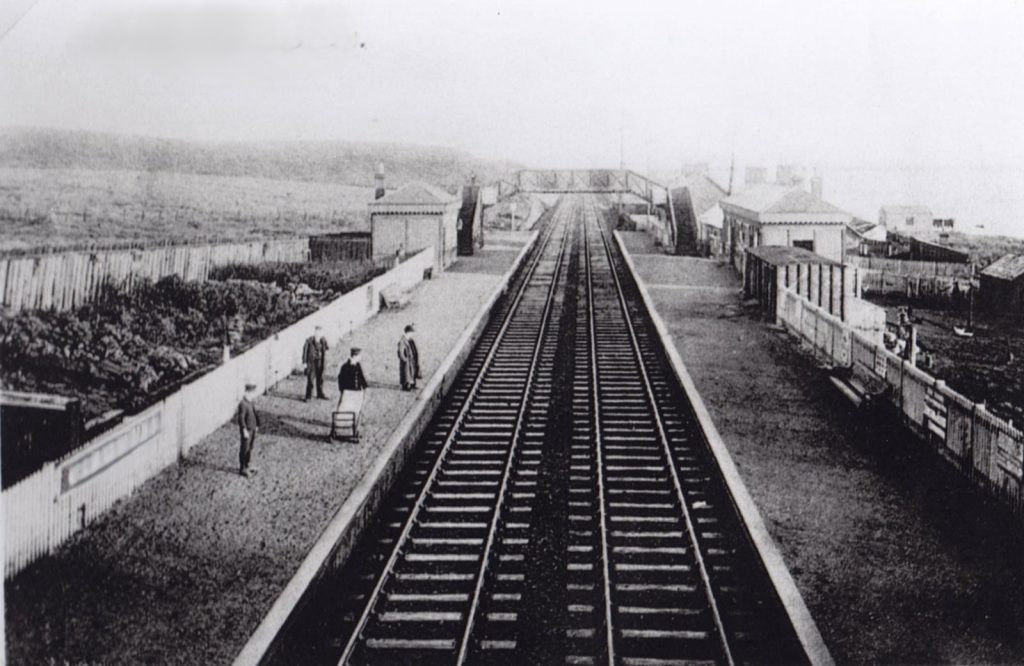
So, Cobbinshaw s very original settlements would have probably been wooden structures at the side of the reservoir where we can see where more modern houses have replaced them and sit today. Cobbinshaw also had It’s own train station too. This was right beside the water side settlements, although as the Industrial revolution came along, we can see from maps that there was an abundance of railway around this area to service the various Industrial works within it.
Why South Cobbinshaw Village Was Built
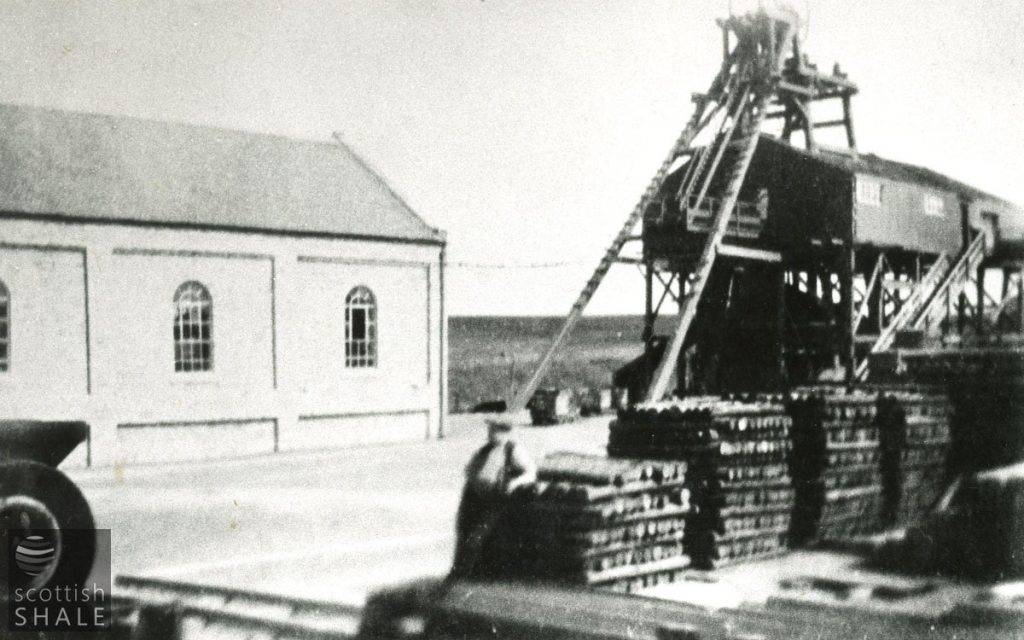
In the mid-19th century, Scottish chemist James “Paraffin” Young pioneered the extraction of paraffin from coal and oil shales. Demand for oil, wax, and ammonium sulphate skyrocketed. Because the oil shale deposits were often located in desolate, remote areas like the waterlogged wastes of Cobbinshaw moss, mining companies had to construct artificial settlements to house their workforce.
The men could not commute across the rugged terrain, so the companies brought the towns to the mines. South Cobbinshaw was born directly from this geographical necessity.
The South Cobbinshaw Oil Company
Industry was first brought to the desolate southern edges of the loch around 1870, when an enterprise known as the South Cobbinshaw Oil Company was established. The operation was spearheaded by a mining engineer named Jonathan Hyslop, along with two Edinburgh businessmen. They sub-let the land to set up a small-scale crude oil works and a brickworks. To house the men required to work the mines, kilns, and retorts, the foundations of South Cobbinshaw were rapidly laid on a gentle, south-facing slope.
Daily Life in the Village
Life in a remote Scottish shale village was notoriously harsh. The village of South Cobbinshaw was built purely for utility, designed to pack in as many workers as possible near the heavy industry and the newly laid mineral railway.
Just Imagine living up back in the day before we had our modern home comforts, amongst the wind swept moorland. Life would have been tough for the people who lived here back then. Nott to mention the constant dangers that were commonplace within the Industries that surrounded the village.
Miner’s Rows and Housing
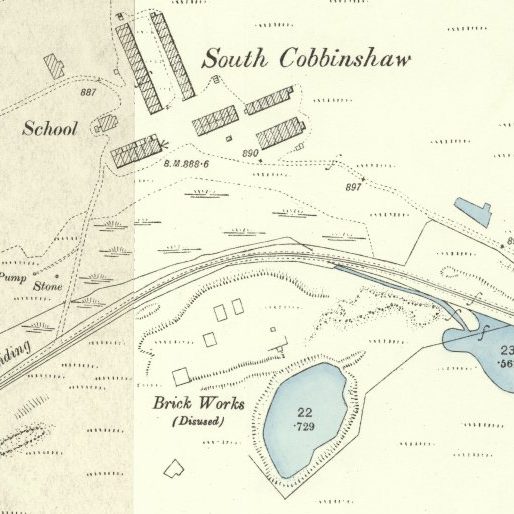
According to historical Ordnance Survey maps from the era, South Cobbinshaw eventually grew to contain roughly 59 to 60 houses. These company-owned houses were arranged in the traditional, cost-effective “miner’s row” format.
Historical records from 1897 reveal two long rows containing 12 dwellings each, and three smaller rows of six dwellings. These structures were likely two-room homes—a “room and kitchen” layout typical of the era. Another row in South Cobbinshaw appeared to consist of 12 single-room dwellings built back-to-back, offering the barest minimum of shelter against the bitter Scottish winters.
Due to these Industrial endeavours only ever Intended to be temporary, the mining and oil companies who built the houses were usually very reluctant to spend any more than they needed to with these lost Industrial villages and
Education and Community in South Cobbinshaw
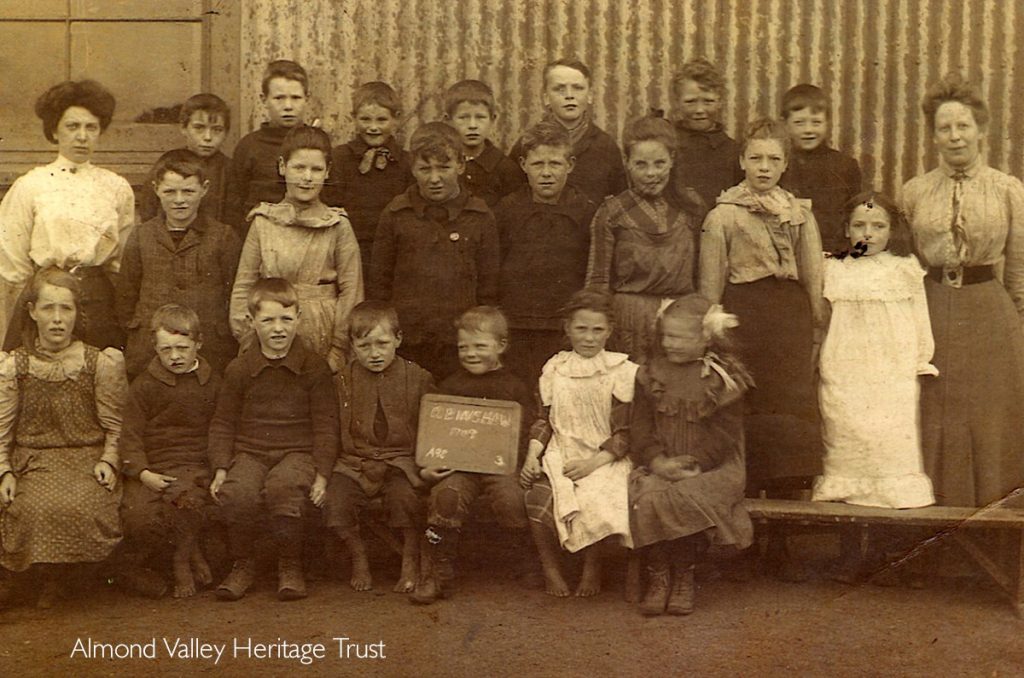
Despite the grim architectural aesthetic and the remote, windswept location, a true community spirit blossomed within South Cobbinshaw. Jonathan Hyssop, who personally oversaw the village, was a strict proponent of temperance.
To ensure the moral fortitude and education of the workers’ families, he mandated the construction of a “substantial wooden structure” to serve as the South Cobbinshaw school.
Over the decades, the village evolved beyond mere housing, eventually featuring a reading room and a local church to support the spiritual and social needs of the residents.
The Economic Rise and Fall
The story of South Cobbinshaw is one of constant economic turbulence. The fate of the village was tied directly to the volatile global oil market and the success of the companies extracting shale from the nearby earth.
Revival the Shale Industry
The initial venture by the South Cobbinshaw Oil Company was not a lasting success, and by 1880, the site was virtually abandoned. However, the most significant revival for South Cobbinshaw came in 1889 when the Caledonian Mineral Oil Co. was formed.
This new company aimed to reconstruct the derelict Tarbrax oil works nearby and chose to house much of its workforce in South Cobbinshaw. This breathed new life into the remote settlement. By 1894, a brand-new school was constructed to accommodate the growing population of children, and around 1900, a United Presbyterian church was erected.
The Sudden Decline
The prosperity of the 1890s was tragically short-lived. The Scottish shale industry faced intense, crippling competition from the massive influx of cheap, imported liquid petroleum from America and the Middle East. The cost of extracting oil from West Lothian shale simply could not compete with the liquid oil gushing from overseas wells, spelling disaster for villages like South Cobbinshaw.
Abandonment and Demolition
In 1903, the Caledonian Mineral Oil Co. was forced into liquidation. This financial collapse marked the beginning of the end for the tight-knit mining community.
Selling Off the Assets
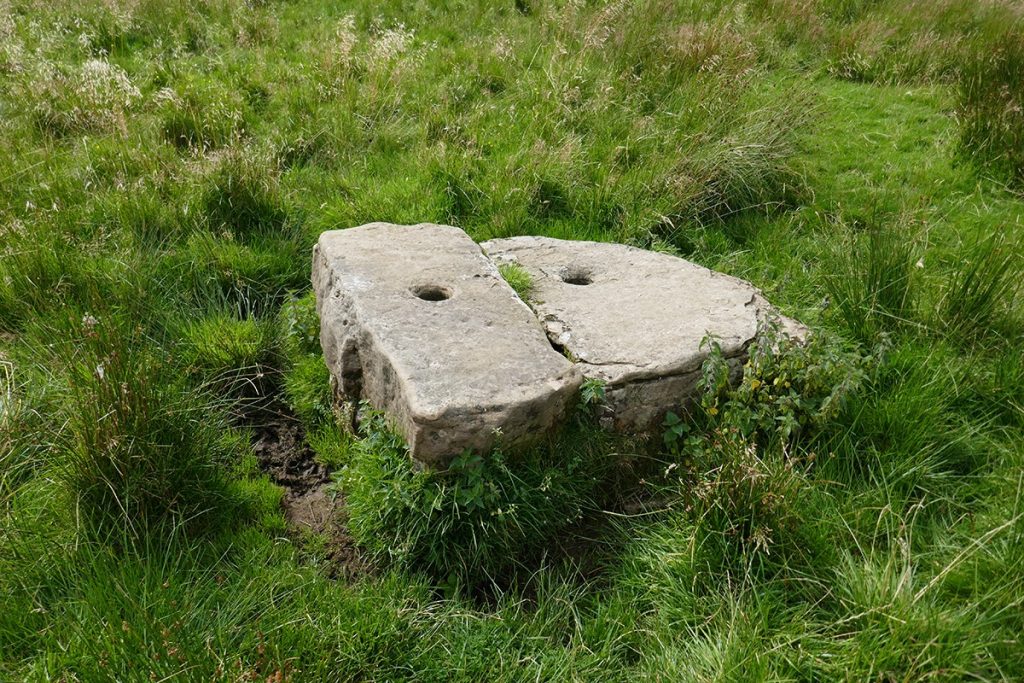
The creditors, desperate to recoup their financial losses, began selling off the company’s assets—which included the village itself. The two blocks containing the twelve best houses in South Cobbinshaw were sold intact to a private owner, the local minister Dir. Hugh Young.
However, the rest of South Cobbinshaw was ruthlessly stripped for salvage. Roof slates, tiles, doors, timber, and anything of value were ripped from the remaining homes, leaving a skeletal ghost town in its wake. By 1925, the last of the housing at South Cobbinshaw was completely demolished, forcing the remaining families to relocate permanently.
Exploring South Cobbinshaw Today
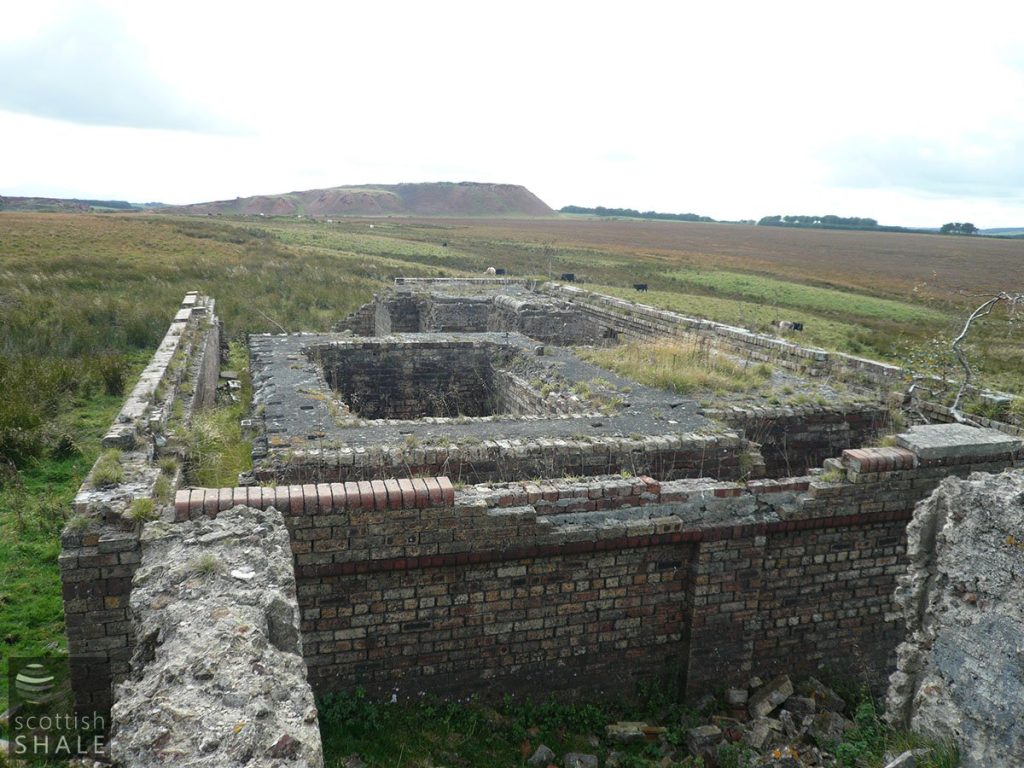
Today, the lost village of South Cobbinshaw has been almost entirely wiped from the map, but its memory persists in the landscape for those who know where to look.
Traces of the Village at the Reservoir
Where rows of brick cottages and the smoke of shale retorts once dominated the skyline, there is now only rough moorland grazing and the tranquil waters of Cobbinshaw Reservoir, highly popular with local anglers.
If you walk the area today, the ghosts of the past still linger. Faint building foundations, the flat, unnaturally straight path of the old South Cobbinshaw mineral railway, and remnants of the old clay pits can still be discerned by keen-eyed explorers.
The Last Surviving Building
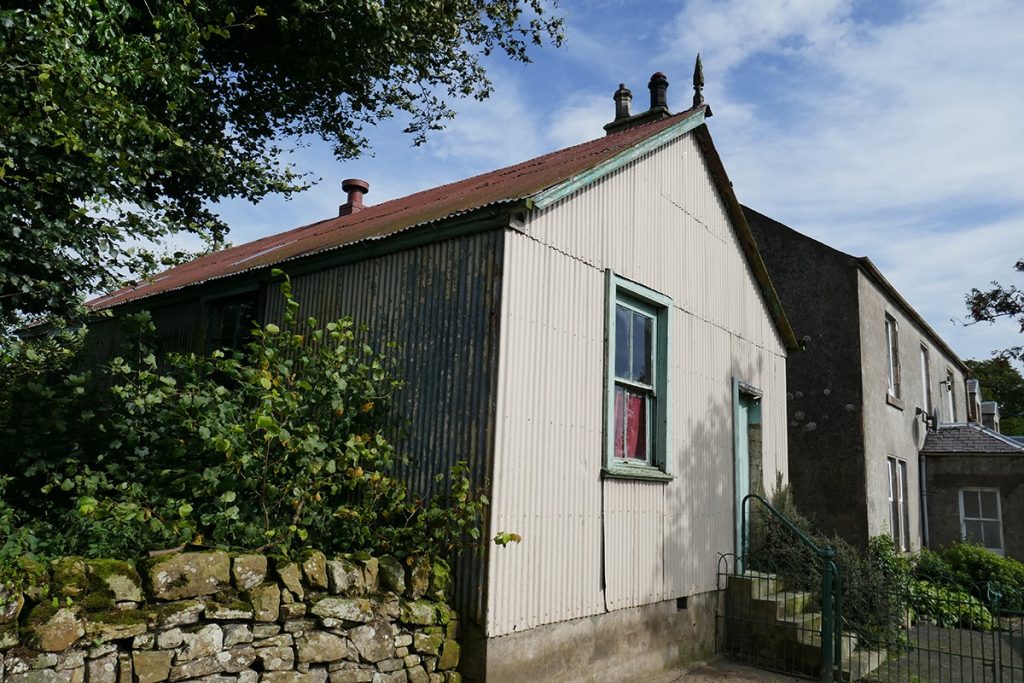
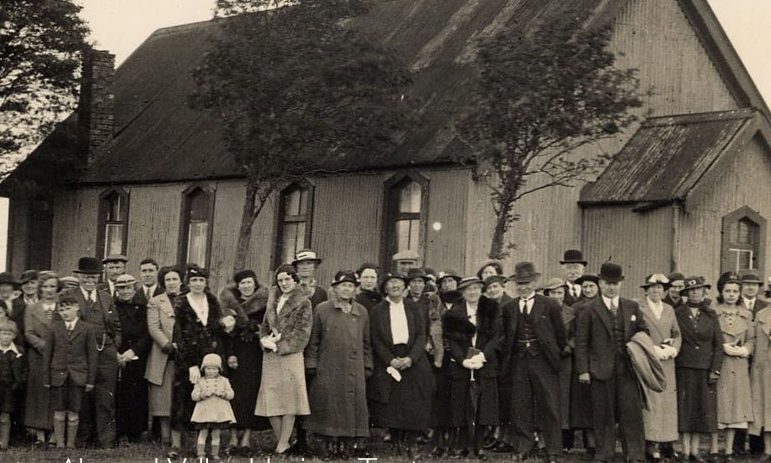
Fascinatingly, one prominent piece of South Cobbinshaw survives intact to this day. Following the abandonment of the village, the corrugated-iron church was dismantled, purchased by the nearby Woolford’s Farm, and carefully re-erected.
The re-erected former Curch has been preserved and still stands today as a recreation hall. A kind of Community Hub for the residents of nearby ‘Woolford’s Cottages’ and surrounding settlements. as a solitary, tangible architectural survivor of the South Cobbinshaw community.
The Enduring Legacy of South Cobbinshaw
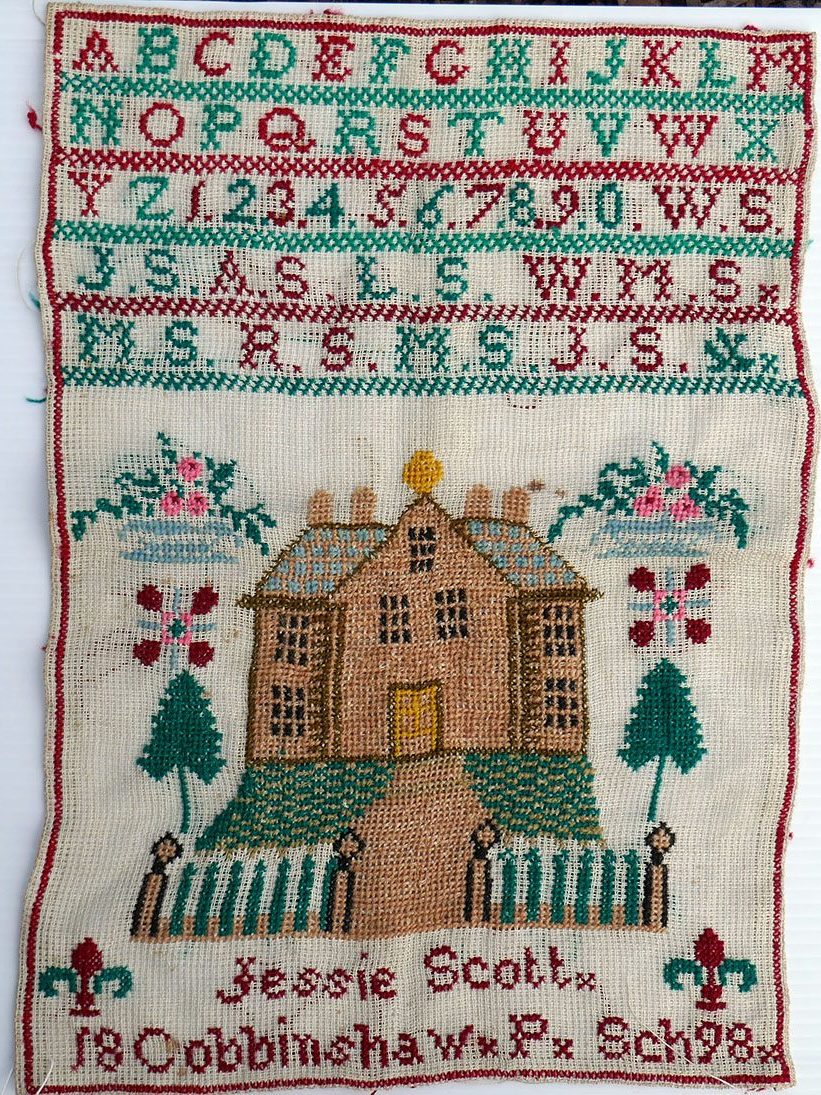
The history of South Cobbinshaw is a poignant reminder of the transient nature of industry. The men, women, and children who lived, worked, and went to school on these remote West Lothian moorlands played a vital role in fueling the Scottish industrial revolution.
While their village may have been erased from modern maps, the legacy of South Cobbinshaw lives on in the historical records, the surviving photographs, and the stories of their descendants. It remains an essential, captivating chapter in the story of Scotland’s rich industrial heritage.