Nestled in the heart of West Lothian, Scotland, the town of Broxburn boasts a fascinating and dynamic history. Located just twelve miles west of Edinburgh, Broxburn is today known as a bustling commuter town with excellent transport links and a vibrant community.
The History of Broxburn
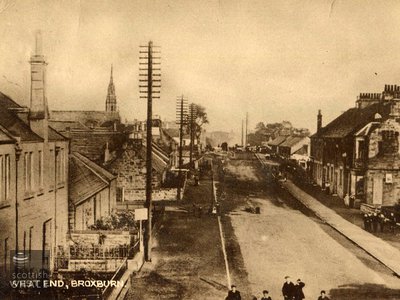
However, a deeper dive into the history of Broxburn reveals a saga of medieval battles, profound agricultural roots, and a monumental industrial revolution that literally shaped the landscape. For anyone exploring West Lothian, understanding how Broxburn evolved from a quiet valley into an industrial powerhouse is essential.
Early Origins and the Meaning of “Broxburn”
The story of Broxburn begins centuries ago in a very different Scottish landscape. Before the factories and the modern roads, this area was a quiet, rural haven.
The Barony of Strathbrock
Historically, the area that encompasses modern-day Broxburn was known as Easter Strathbrock. The name “Strathbrock” is an ancient one, derived from a mixture of Gaelic and Peckish or Brythonic roots. “Strath” or “srath” translates to a river valley, while “brock” or “broc” is the old Celtic and Scots word for a European badger. Therefore, the region was essentially known as the “valley of the badgers.”
The settlement that would eventually become Broxburn began to form around 1350. During this time, Margery le Cheyne inherited the eastern half of the Barony of Strathbrock. The small hamlet that grew up around her residence was initially called Eastertoun (meaning “eastern town”), distinguishing it from Wester Strathbrock, which is the present-day neighbouring village of Uphall.
“Brock’s Burn” – The Etymology
It was not until the year 1600 that the village officially adopted the name we know today. Sir Richard Cockburn of Clerkington, who was the Keeper of the Privy Seal of Scotland, renamed the village Broxburn. The name directly translates to “badger’s stream” (with “burn” being the Scots word for a large stream or small river).
The name was likely influenced by a place with the same name in East Lothian, but it perfectly described the local wildlife and the vital Brox Burn waterway that flows through the heart of the town.
The Medieval Period and Conflict
The early history of Broxburn was not without its share of violence and destruction. Lying in the strategic Scottish Lowlands, the area was frequently caught in the crossfire of warring nobles.
The Black Douglas’s and Fire
In the mid-15th century, Scotland was plagued by a fierce power struggle between the Crown and the powerful Black Douglas family. Sometime during 1443 and 1444, a violent conflict erupted between William, Earl of Douglas (the Lieutenant-General of Scotland), and William, Lord Crichton (the Chancellor of Scotland). During this brutal clash, the village of Easter Strathbrock was burned to the ground.
Tragedy struck the small community again just a decade later in 1455, when it was destroyed a second time during further battles between the Douglas’s and King James II.
Kirkhill House and Rebuilding
Despite these devastating setbacks, the resilient locals eventually returned to resettle the land once peace was restored. By the late 16th century, the area began to prosper once more. In 1590, Kirkhill House was constructed for a local landowner named John Laing. This prominent Category B listed building still exists in Broxburn today, standing as a tangible reminder of the town’s post-medieval rebirth.
The Industrial Revolution: Canals and Railways
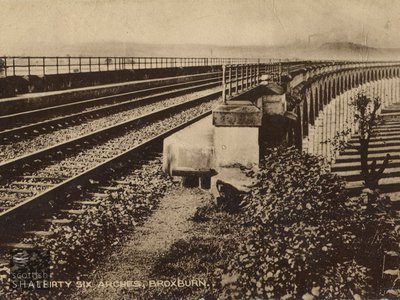
For centuries, Broxburn remained a quiet agricultural community. However, the dawn of the 19th century brought massive technological changes that would forever alter the trajectory of Broxburn.
The Arrival of the Union Canal (1822)
The first major catalyst for change was the construction of the Union Canal, designed by the legendary engineer Thomas Telford. Opened between 1818 and 1822, the canal passed directly through Broxburn. Its primary purpose was to provide a cheap, efficient route for transporting coal and agricultural goods from the west into the rapidly expanding city of Edinburgh.
The Union Canal placed Broxburn firmly on the Scottish transport map. Goods could be loaded onto barges at Port Buchan, stimulating local trade and setting the stage for the industrial explosion that was to follow.
Railway Connections
Following the canal, the railways arrived. By 1849, rail links near Broxburn and neighbouring Uphall provided even faster transport. While the canal eventually gave way to the railway as the primary method of industrial transport in the early 20th century, the combination of both waterways and tracks made Broxburn a prime location for heavy industry.
The Shale Oil Boom: Transforming Broxburn
The most defining era in the history of Broxburn occurred in the mid-to-late 19th century. If you visit Broxburn today, the towering red “bings” (spoil heaps) that dominate the skyline are the direct legacy of this incredible period.
The Discovery of Shale Oil
In 1859, the Earl of Buchan granted mineral extraction rights to Robert Bell, a coal master from Wishaw. Bell came to Broxburn looking for coal and ironstone. Instead, he struck liquid gold: he discovered vast, rich seams of oil-bearing shale beneath the soil. Following the pioneering chemical extraction methods developed by James Young, Bell realized the massive potential of this resource.
Robert Bell and the Broxburn Oil Company
In 1862, the Broxburn Shale Oil Company Ltd. was formed. Broxburn rapidly became the epicenter of West Lothian’s shale oil boom. The process involved mining the shale rock, crushing it, and heating it in massive retorts to extract mineral oil, wax, and ammonia.
The booming industry required a massive workforce. Thousands of workers—many of them Irish immigrants seeking a better life—flocked to Broxburn. The local population exploded, transforming Broxburn from a sleepy village into a bustling industrial hub. To house this massive influx of laborers, large rows of terraced houses were hastily constructed in areas like Greendykes and Holygate. Alongside the oil works, other industries flourished, including chemical and candle manufacturing plants. Broxburn candles, made from the paraffin wax extracted from the shale, were famously exported all over the world.
The Legacy of the Bings
The shale oil industry sustained Broxburn for decades, serving as the major employer until the mines began to shut down in the late 1920s due to cheaper foreign liquid oil imports. The physical footprint of this era remains highly visible today in the form of the Broxburn Bings—namely Greendykes Bing, Albyn Oil Works Bing, and Hopetoun Bing. The Greendykes Bing is the largest, created from millions of tons of spent shale rock. Today, these bings are scheduled monuments, overtaken by unique flora and fauna, and offer excellent hiking trails and panoramic views of West Lothian.
Modern Broxburn: Post-Industrial Evolution
Following the decline of the shale industry in the mid-20th century, Broxburn had to reinvent itself once again.
Transition to a Commuter Hub
After the Second World War, Broxburn saw significant ribbon development, expanding outward with modern housing estates. Its prime geographical location—situated perfectly between Edinburgh and the new town of Livingston, and flanked by the M8 and M9 motorways—made it highly attractive. Today, Broxburn is a thriving commuter town. It benefits from two main industrial estates (Greendykes and East Mains), providing local employment alongside a bustling Main Street filled with independent shops, cafes, and local amenities.
Preserving the Heritage
While it embraces modern residential growth, Broxburn has not forgotten its roots. The Union Canal, officially closed to commercial navigation in 1965, was beautifully restored in 2001 as part of the Millennium Link project. Today, the towpaths are highly popular with cyclists, runners, and dog walkers, while the waters host recreational boating and swans.
Furthermore, local institutions like the Broxburn and Uphall Community Museum work tirelessly to preserve artefacts from the town’s agricultural origins and its time as a global leader in shale oil production.
Broxburn Today
The history of Broxburn is a testament to resilience and adaptation. From a medieval valley named after the badgers that roamed its streams, through the fiery clashes of Scottish clans, to the smoke-filled skies of the Victorian shale oil boom, Broxburn has continuously evolved. Today, it stands as a peaceful, well-connected West Lothian town that proudly wears its industrial heritage on its sleeve—quite literally, in the towering red bings that watch over the community to this day.