
So, this is a story about a place that literally just disappeared. We’re talking about the lost village of Kingscavil. A village of West lothian that was born in the Industrial boom. But it didnt even last fifty years before it was completely gone. f you went to this spot in West Lothian today, all you’d see are these quiet, green fields. looks quite peaceful. But beleive it or not, these fields are hiding a huge secret and at One time, a whole community, lived, breathed, worked and died. yes.
The Lost Village of Kingscavil
Less than a Hundred years ago, this wasn’t empty land at all. It was a thriving village. We’re talking over a Hundred homes, a school , a church, the lot. So, the big question is – Where did it go?
Here’s where it gets even crazier. Kingscavil Isn’t just some One off thing. It’s story is actually part of a much bigger pattern. This is just One of over twenty of these Lost villages in the west Lothian area. All of them just popped into existence because of this huge Industrial boom. But then vanished when the whole thing went bust.
West Lothian’s Black Gold
Okay then. So how did a whole village just disappear? Well, to figure that One out, we have to go back to the beginning. Why was it even built? For Kingscavil, it all starts with something they call ‘Black Gold’ – Shale Oil. The seed of this change was just breath-taking. In 1887, The Scotsman Newspaper said it was like something you’d read about in the Wild West. Just Imagine it. A whole new world being built, basically overnight. All for this booming Shale Oil industry.
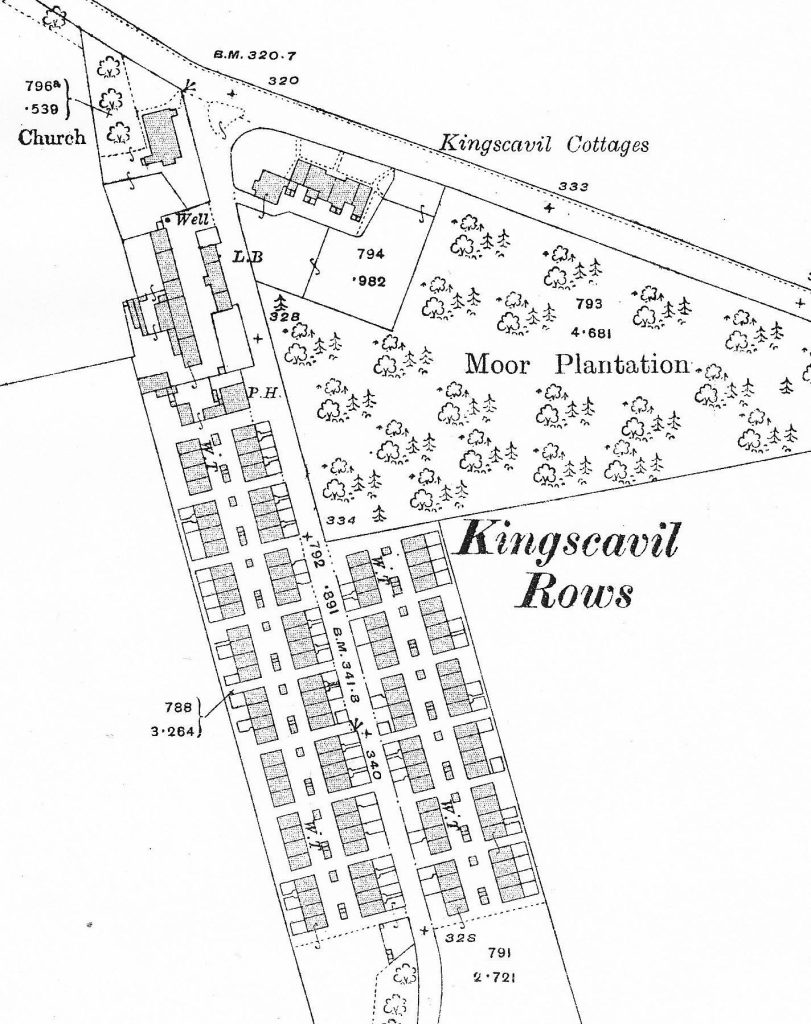
The rise and Fall of Kingscavil is staggering. The village was built around 1885. But the Oil Works, which was It’s Life Blood, closed just 17 years later in 1902. By 1937, the entire village was gone. The story of a whole community, from birth to death, in just over Fifty years. You see, this wasn’t just some random collection of houses. No, it was a totally, perfect built community
The Linlithgow Oil company built a Hundred and fourteen homes specifically for their workers. But they didnt stop there. They threw in a school for the kids, a church and even a big general store. Everything a family could need. Created from scratch, all to support the local Champfleurie Oil works.
Life in the Rows
So thats the ‘What’. But what about the ‘How’? What was it really lie to live there. What was daily life like for the people who lived in these purpose built workers rows? Well, fortunately for us, we actually have a unique and Incredible window into that world, all thanks to oral history. This quote from a guy who used to live there reads “You had Four Walls, Two Windows, a Door and a Roof. that’s it. No thrills. Just super basic and that’s it.
Mixed Memories
Although ‘basic’ is probably putting it mildly. especially when you get to sanitation. Other residents remember sharing a cold, wet, outdoor toilet with the residents from Four other households. Another resident, Mrs M, really didnt pull any punches. She says that “..Hygiene was pretty much Non-Existing”. I mean, you can’t get much more blunt than that. It’s a powerful summary of a harsh reality these folk lived with every single day.
Now this is where things really start to get fascinating. You got this contrast in how the village was remembered. On One hand, you had the public memory. The story of neighbourliness, of community spirit, everyone pulling together. But then you have the private accounts from these oral history accounts. They seem to tell a much darker story. Hi, bigotry and even violence and neglect.. The truth, as it usually is, lies probably somewhere in the middle.
The End of an Era
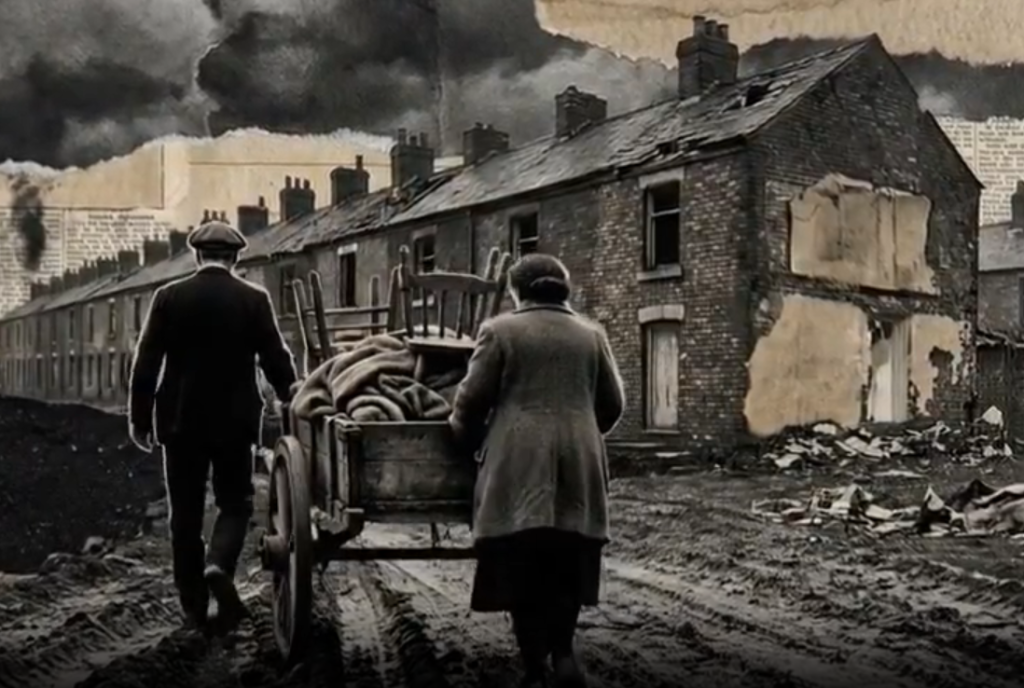
Now this way of life was always a mixture of Good and Bad. It was built on a really shaky foundation to begin with. It was completely dependent on One single Industry. So, what do you think happened when that Industry collapsed? thats right! you guessed it! the village was doomed. So lets take a look at the decline of Kingscavil and ultimately, it’s demolition. So, here it is. The big turning Point.
The year is 1902. It’s been less than Twenty years since the village was even built and the Champfleurie Oil Works closes It’s doors for good. It turned out that the Shale Oil wasn’t the greatest quality, with newer discoveries of crude oil in America and Arabia. the company wasn’t making enough money and so suddenly, the villages whole reason for existing was completely gone in an Instant. Just like that. The downward spiral was fast. I mean, really fast.
Just One year later, in 1903, the local Newspaper was already commenting on the poor living standards and Poverty in Kingscavil village. With the company gone, nobody was doing any maintenance. The sanitation, which was already terrible, turned Into a full blown public problem. The Official end didnt come all at once. It was more like a slow bleed. By 1930, the Public Health board were demanding that something be done.
A year later, the sanitary inspection recommended that the place be condemned for demolition. This recommendation was made official in 1937 after a government enquiry deemed the place unfit for people to live in. That was the final nail in the coffin. The demolition order was for One hundred and Four of the houses be demolished. The plan was to rehouse the residents and an entire village was essentially sentenced to death.
What Remains of Kingscavil Today?
Okay, so all the houses were torn down. The people moved away. So, is there anything left of Kingscavil at all? Actually, there is, and more than you might think. For starters, the name Kingscavil is still on the map. A couple of the main buildings, like the Church and the School are still standing. There was even a famous Artist named William Frater came from there. But perhaps most importantly, the stories and memories of the people who lived there. thankfully many of them have been saved.
The story of the Church is especially wild. It opened in 1902, the exact same year the oil works closed down. It was built for a community that was technically, already dying. Yet somehow, It has managed to outlive the entire village it was built for. It’s like this stone testament to a whole community we can’t even see anymore.
The Final Mystery
But hold on! The story isn’t over yet. Not by a long shot, because maybe the most amazing par of the story isnt what sying above ground, but what might be buried just underneath. Now fastforward to 2005. A local farmer was out in the field One day going about his work when he stumbled upon something Incredible.A whole network of ancient tunnels.
Whats more is that these weren’t just rough caves. they were beautifully made. These were hand cut sandstone with arched roofs. They seem to run for about a mile, starting around about where the old village used to be. Yet to this day, nobody knows what theyre for.
Could they be some ancient medieval Aqueducts? Maybe Monk Holes? Some sort of farming project? Or could they be something else entirely. It’s this final, amazing layer to the whole story. It just makes you wonder what other secrets are still out there, buried just below the surface.