Have you ever looked at Old maps from centuries ago and saw your West Lothian town noted upon it? Yet you find it hard to find any Information of the goings on there over the centuries? I mean, if it was there back then, surely people must have done something all that time. So, how come It’s so hard to find any record of events there until much later, for most, the early 20th century. Well thats because what you saw on the map wasn’t the town as you know it now. It was a ‘Fermetoun’.
What was a Fermetoun?
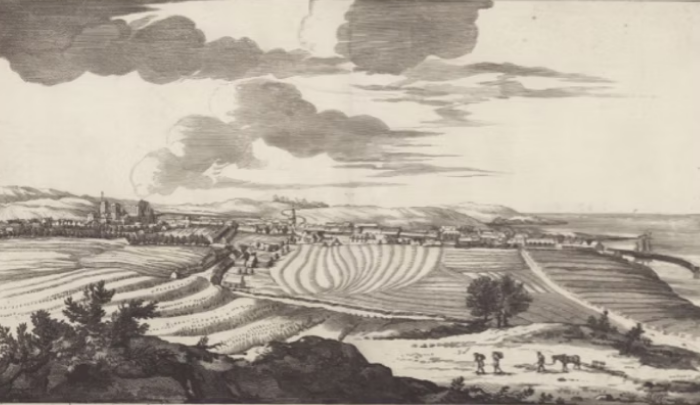
So, as you may have guessed, the word ‘Fermetoun’ was Scottish dialect for ‘Farm Town’ and thats exactly what a lot of these towns you see on old maps were. They weren’t just towns. They weren’t just farms. But all of these agricultural settlements were Indeed a mixture of both. They were more like farming communities of around 10 to 12 families. Everyone in these fermetouns would have had their own little bit of land to grow their own produce.
But It wasn’t just West Lothians Towns that were previously fermetouns. Most of the farms that you see around West Lothian today, were also Once Fermetouns like these. So, rather than Towns with a population of a few thousand and a load of farms in between, you had Instead, a cluster of little fermetouns of around 50-60 people dotted all over the land. This would have ben the case not only in West Lothian but all over the country. From coast to coast, you had an array of these communities.
Who owned the Fermetoun?
However, these weren’t just Independent autonomous communities. each of these Fermetouns would have been property of the Lord or Laird of the area who would own a handful of these places. So each year, the residents of each Fermetoun would be obliged to pay rent to the Landlord. This rent would have been paid not in money but in produce. This would have either been ‘Ferme’ or ‘Kain’.
Ferme
Sometimes referred to as ‘Victual’, this form of rent payment would consisted of part of the annual harvest. So the tenants would have paid in grains of Corn, wheat, barley and the like. Back at the lairds house, which would have been the local Mansion or ‘Hall’, theyd have had granaries. These were big vats that the lairds factor could bring all the grain collected from the Fermetoun residents. They could then sit on this stock until the market price was right, then sell at their own discretion. This way, the lairds stood to profit handsomely from this rent.
Kain
This would have been other produce that the fermetouns made. Things like Chickens, rabbits, Milk, Eggs, Cheese and what not. the lairds would have expected a quota of this ‘Kain’ from each Fermetoun. Unlike the annual payments of ‘Ferme’, would have been doubtlessly paid on a more regular basis and served to keep the Lairds and their families in a plentiful diet. Although a lot of the produce would have been sold at the local markets, or ‘Merkits’.
Thirlage and Bondage
Now, the structure of this old system originated from the 12th and 13th century when Feudalism was Introduced to the British Isles by the Normans. It demanded that peasants be subservient to their Lord or Laird. This meant that at any time, they could be called upon to go off and fight for their masters. But it wasn’t just military service that was expected. This also included labour. Residents of each Fermetoun would have been expected to serve a quota of manual labour for their Laird each year.
Throughout West Lothian, Iron mining and later on, in the 18th century, Coal mining was popular. Residents of these communities would have been expected to go and work down these mines for a stint each year.. This would work in rotation with the amount of labour expected being dependant on the size and population of each lairds land.
This type of Slavery in Scotland was commonplace right upto the end of the 18th century when the ‘thirlage Act of 1799’ saw It’s abolition. This of course was done to suit the commercial mining companies which were on the rise, since it absolved them of the responsibility over their workers. up until this point, although the the peasantry were slaves, their masters still had a duty of care to protect their lives and wellbeing. the abolition meant that all responsibility was settled by the wage. But, we’ll get to that.
The Runrig System
Now, these little agricultural townships didnt look like you’d expect them to look judging by how agricultural land looks today. They didnt have big square, walled in fields. Instead, back then they still used what was known as the Runrig’ system of farming. These were long strips of land, or ‘Rigs’ that were laid out in long strips, or ‘Runs’ with a dip, or ‘Furrow’ in between each.
Each family would be allocated their own Rig to plant their crops. These ‘Rigs’ were rotated each year to ensure each family got a turn on the best fertile Rigs as well as a turn on the not so fertile ones. The areas of the fermetouns would have resembled a more circular shape with the steadings in the middle with each Rig running outwards to the Fermetouns edges.
However, this was before you had scientific insight on agricultural methods. Each of these farmers would have known what they knew about the subject by what they were taught orally from their parents and ancestors. But as much as this is a dignified tradition, it wasn’t always the most effective. All it took was One generation to get it wrong and that mistake would be passed on for generations to come. The people often relied on offering up prayers at Holy wells and the like in the hope of a better yield next harvest. Sometimes they worked and sometimes they didnt. No surprise there.
What became of the Fermetoun?
This all changed in the 18th century with the ‘Great Improvement’. During this period, often known as ‘The Scottish enlightenment‘ saw a dramatic change to the lowlands of Scotland which is clearly seen in and around West Lothian today. The sons of the wealthy noblemen were sent to Universities where they learned the Sciences. many of these young students such as William Wardrop who developed the Cult estate near Whitburn, learned how to apply this Science to agriculture.
Of course, this new Input from the nobility was often met with contempt. “What does the spoiled son of a wealthy Lord know about farming2 was often the sentiment throughout these Fermetoun communities. But the results were undeniably more prosperous. At least to the landowners.
New, Modern Methods
By applying science to farming, they came up with a new method. One that involved completely levelling the land. Then getting rid of the centuries old Runrig Infrastructure and creating huge square fields. there would be contained by stone walls and hedges of trees to break the winds.
This new method of arable farming was Indeed a far better outcome for the landowning lairds. It Increased the profit massively. Rather than the Lairds Income being dependant upon the success of their many tenants, they had more control on the predetermined outcome of the yearly harvest. By appointing just One farmer and his family to oversee the whole previously Fermetoun area, they could maximise profits whilst absolving themselves of the responsibility of looking after their hundreds of tenants.
Go, Move, Shift!
But what became of all these Fermetoun residents. If the entire area could be managed by One tenant farmer and his family, there was no need for their presence any longer. This period in Scotland’s History is what is known as the Lowland Clearances’ which is an Era far less known and talked about than the famous ‘Highland Clearances’. Why was this?
Well, you see in the Highlands, the residents were less inclined to leave their homeland voluntarily. The slaughter that ensued made engraved these clearances eternally into the history books which is why we hear so much of them today. But in the Lowland Fermetouns, although there was a little bit of force used. Most of the people were Inclined to leave their homes by coercion.
This coercion came in the form of work in other places. Many made their way into the growing cities of Glasgow and Edinburgh where the Industrial revolution was taking off. They found work in Factories and mills. Many left for overseas to Canada, Australia, New Zealand and the United States in pursuit of a better life.
Going to Town
However, they didnt all leave the area. Some made their way into the little weaving villages and market towns that we now know as West Lothians Towns. Others stayed rural and sought work in the growing amount of coal and shale mines that would come to dominate West Lothian throughout the Industrial boom of the 19th century.
They lived in Company villages built by the mining companies for their workers. Later on they would come to join the others in the towns in the late 19th and early 20th centuries which saw the sudden enlargement of these little villages as they became what we now know as our towns.
Their Mark on the land
the old fermetouns didnt vanish completely. Their mark on the land throughout West Lothian is still clearly seen in the present day. Not as small communities but as farms we know today. the vast majority of the farms you see today around West Lothian werent always like that. They wrere little towns about the same size as the Towns we know today were. Some even bigger.
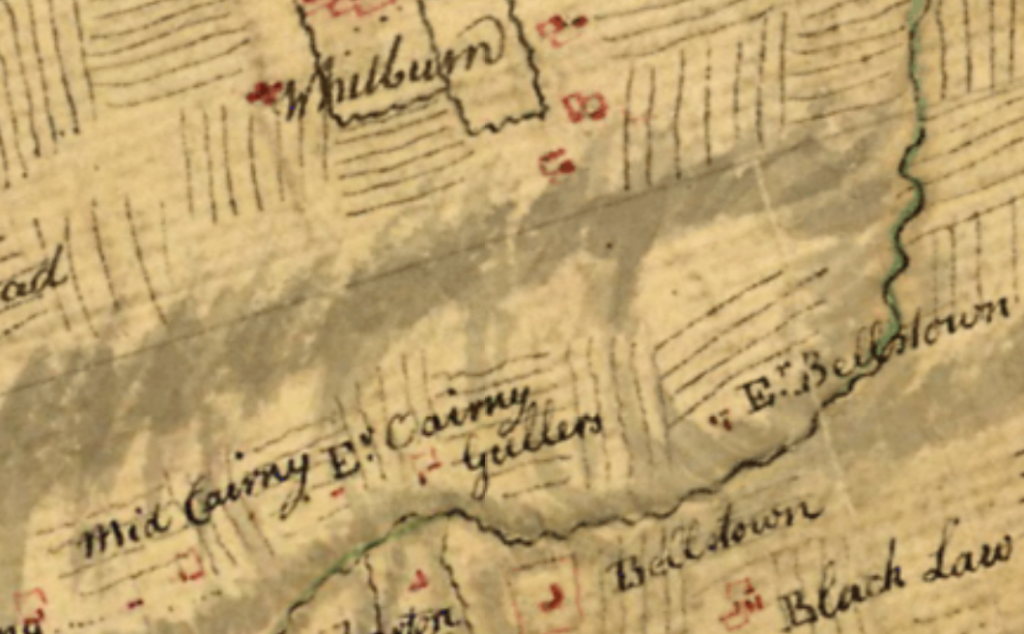
So take a look again at these Old maps from the early 18th century and beforehand. We see our present day towns as tiny little places. But not because there was a shortage of people in the area. The area had lots of people. But there y were much more spread out over the land. If you look at these maps, we often see names of places we recognise as todays farms. These places were home to Thousands of residents collectively.
Doubtless there was plenty of goings on over the years. But a lot of it was unrecorded as most of the Fermetoun residents were Illiterate. So very little was written down. It was only really the Landlording nobility that were able to write down the places History. Since most of these towns were just seen by them as the same as the fermetouns, they felt no need to record their deeds. if only we could speak to the ghosts of these places. I’m sure theyd have plenty of stories to tell.