
Nestled in the heart of West Lothian, Scotland, the village of Uphall boasts a fascinating history that stretches back nearly a millennium. While today it is widely recognized as a peaceful commuter village with excellent links to Edinburgh and Glasgow, the history of Uphall is a dynamic tale of ancient settlements, powerful noble families, and a massive industrial revolution that changed the landscape of Scotland forever.
Whether you are a local resident tracing your heritage, a historian of Scottish industry, or simply curious about West Lothian’s past, understanding the history of Uphall offers a unique window into the broader historical shifts of the Scottish Lowlands.
The Early Origins: From Strathbrock to Uphall
To understand the early history of Uphall, we must look to its original name. For centuries, the area we now know as Uphall was called “Strathbrock” (sometimes spelled Strathbroc).
The Meaning Behind the Name “Strathbrock”
The ancient name “Strathbrock” is derived from Scottish Gaelic and translates roughly to “the valley of the badgers” (Srath Bhroc). This pastoral name accurately reflects the early environment of the area. Long before the heavy machinery of the industrial revolution arrived, this region was dominated by fertile agricultural lands, dense woodlands, and wildlife situated along the Brox Burn.
The Shift to “Uphall”
The transition from the name Strathbrock to Uphall occurred gradually. By the 16th and 17th centuries, the name Uphall began to appear in records, originally referring to the main estate or “upper hall” of the local landowners. Over time, the designation of the estate slowly became the accepted name for the entire village and the surrounding parish, leaving “Strathbrock” to history, though the name is still preserved today in local street names and the local Strathbrock Parish Church.
Religion and Heritage: St. Nicholas Church
One of the most vital anchors of Uphall’s history is its local church, which has stood as a focal point of the community for centuries.
A Norman Foundation
The original parish church, St. Nicholas, dates all the way back to the 12th century, bearing classic hallmarks of Norman architecture. Although the building has undergone significant renovations, extensions, and restorations over the centuries—particularly in the 17th century—fragments of the original Norman structure remain. For historians, the church is a vital physical link to the medieval history of Uphall. The church also features a bell cast in the 15th century, making it one of the oldest church bells still in existence in Scotland.
Notable Figures and the Earl of Buchan
The graveyard of St. Nicholas Church in Uphall is the final resting place for several notable historical figures. Perhaps the most famous is the Honourable Henry Erskine, and his brother, the 11th Earl of Buchan, David Steuart Erskine. The Earl of Buchan was a prominent antiquarian and patron of the arts in the late 18th and early 19th centuries. The presence of such influential aristocratic figures highlights Uphall’s historical significance as a place of residence for the Scottish elite.
The Era of Estates: Houston House and Local Lords
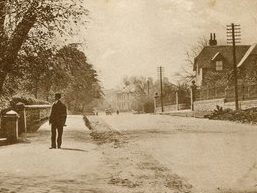
During the medieval and early modern periods, the history of Uphall was largely dictated by the wealthy landowners who controlled the estates surrounding the village.
The Sharp Family Legacy
The most prominent architectural survivor of this era is Houston House. Originally built in the 16th century, the house was the traditional seat of the Shairp family. Thomas Shairp of Houston was a significant figure who acquired the lands in the mid-1500s. The Shairp family would remain deeply intertwined with the development of Uphall for generations.
Today, Houston House has been remarkably preserved and transformed into a luxury hotel and spa. Its distinctive stark white, harled walls and classic Scottish crow-stepped gables serve as a striking visual reminder of Uphall’s aristocratic past, standing in stark contrast to the industrial heritage that would later define the village.
The Industrial Revolution: The Shale Oil Boom in Uphall
While Uphall remained a quiet agricultural parish for many centuries, the mid-19th century brought an explosive period of transformation. The catalyst for this change was buried deep beneath the West Lothian soil.
James “Paraffin” Young and the Shale Industry
The history of Uphall changed forever with the arrival of the shale oil industry. In the 1850s, the pioneering Scottish chemist James “Paraffin” Young patented a process for extracting oil from coal and later, oil shale. West Lothian, and specifically the area around Uphall and neighbouring Broxburn, was found to be rich in this oil-bearing shale.
Uphall quickly became a focal point of the world’s very first commercial oil industry. The Uphall Oil Company was established, and massive shale works were built. The skyline of the village was rapidly altered by towering brick chimneys and massive “bings”—enormous, red, flat-topped hills made of the spent shale waste that still define the West Lothian landscape today.
Growth, Railways, and Transformation
The shale oil boom dramatically altered the demographics of Uphall. The promise of work drew thousands of laborers, miners, and engineers to the village. To accommodate this exploding population, rows of miner’s cottages were rapidly constructed. The quiet, badger-filled valley of Strathbrock became a bustling, smoky hub of industry.
The arrival of the railway was another crucial milestone in the history of Uphall. A railway station was opened, facilitating the mass transport of shale oil products to global markets and securely connecting Uphall to the growing cities of Edinburgh and Glasgow. Uphall was no longer an isolated rural parish; it was a vital cog in the machinery of the British Empire.
Modern Uphall: A Thriving West Lothian Community
The shale oil industry could not last forever. By the mid-20th century, the discovery of cheaper liquid crude oil overseas rendered the Scottish shale industry economically unviable. The Uphall shale works were eventually dismantled, but the village did not fade away.
Transition to a Commuter Village
As the 20th century progressed, Uphall successfully transitioned into a new era. The very transport links that once carried oil—such as the railway and the nearby construction of the M8 and M9 motorways—made Uphall an incredibly attractive place to live for commuters.
Today, Uphall is a highly sought-after residential village. It shares a close relationship with the adjacent town of Broxburn, with the two settlements having practically merged over the years. Modern housing developments have expanded the village boundaries, attracting young professionals and families drawn to the balance of rural charm and urban accessibility.
Preserving Uphall’s Heritage
Despite its modern growth, Uphall has not forgotten its roots. The distinct red bings still watch over the village, now recognized as important ecological sites and historical monuments rather than industrial waste. St. Nicholas Church continues to serve the community, and Houston House remains a proud landmark.
The history of Uphall is a testament to the resilience and adaptability of Scottish communities. From the ancient Gaelic “valley of the badgers” through the aristocratic estates, the fiery heights of the global shale oil boom, and into its current status as a bustling commuter village, Uphall remains a vibrant and historically rich cornerstone of West Lothian.