
Scotland holds a rich and fascinating religious history. You can see this clearly in local churches and cemeteries. We will explore this deep heritage today. The sacred sites here span from the medieval period to modern times.
Exploring the Historic Churches and cemeteries of West Lothian
Visitors often marvel at the stunning medieval architecture. Genealogists love the detailed parish records found here. We will journey through time to uncover these hidden gems. You will discover stories of monks, knights, and everyday people.
Early Medieval Roots at Abercorn and Torphichen
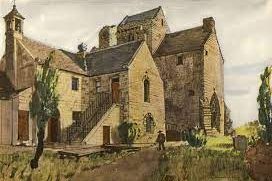
Abercorn Kirk sits on an ancient monastic site. Monks from Lindisfarne Priory founded a monastery here. This happened in the seventh century. The current building dates back to the eleventh century. It features a beautiful twelfth-century south door. You can find ancient stones in the local museum. These include Anglian, Pictish, and Viking era carvings. These early relics show the deep roots of local faith.
Torphichen also boasts incredible early religious history. St Ninian reportedly founded a wooden church here around 400 AD. The Knights Hospitaller of St John arrived in 1165. They made Torphichen their Scottish headquarters. The remaining Torphichen Preceptory stands as a testament. The adjoining churchyard holds many fascinating ancient graves. You can feel the history as you walk the grounds. These knights left a permanent mark on the local landscape.
The Splendour of St Michael’s in Linlithgow
Linlithgow Palace sits right next to St Michael’s Church. This magnificent building is a fine medieval church. Builders constructed the main parts during the fifteenth century. Fire and time caused damage over the years. However, dedicated locals restored it several times. It stands proudly today as a beacon of history.
The church retains its original south porch. It also features a stunning oriel window. Kings and queens worshipped here during the medieval era. Mary Queen of Scots likely visited this church. The graveyard outside is equally impressive. You can find headstones dating back hundreds of years. The carvings on these stones tell stories of local tradesmen. They also show the high infant mortality of the past.
Reformation and the Kirk of Calder
The Kirk of Calder lies in the village of Mid Calder. Peter Sandilands began building it in 1541. This was just before the Scottish Reformation. He built it on the site of an older church. The older church dated back to the twelfth century. The architecture features beautiful ashlar stone in a Gothic style.
The church was operational by the 1560 Reformation. Interestingly, builders never completed the original massive design. The west section of the nave remains absent today. Inside, you can find a wooden pew dated 1595. The churchyard has memorials dating back to 1636. Local lords and commoners rest together in this peaceful place. The famous Sandilands family has strong ties here. You can see their influence throughout the historic building.
Growth of the Parishes in Kirkliston and Bathgate
Kirkliston Parish Church has a very long history. A bishop dedicated the Church of Liston in 1244. Knights Templar once owned land in this area. People used to call the village Temple Liston. Large sections of the church walls are medieval. The church tower includes a spiral stair in the corner. This tower gives the building a very unique silhouette.
Bathgate also has a rich religious heritage. The old Bathgate High Kirk served the community for generations. Bathgate Old Churchyard contains many fascinating headstones. You can spot names of prominent local families. Mining and industry brought more people to Bathgate later. New churches sprang up to serve this booming population. The town expanded rapidly during the industrial revolution. These new buildings reflected the wealth of the Victorian era.
Genealogists Love the Churches and cemeteries of West Lothian
Family historians flock to this region every year. They come to trace their Scottish ancestry. The Churches and cemeteries of West Lothian hold vital clues. Old parish registers record baptisms, marriages, and burials. You can find records dating back to the 1600s. These documents reveal fascinating details about daily life. They help people connect with their distant Scottish roots.
Uphall Cemetery is a fantastic resource for researchers. Volunteers recently transcribed over 12,000 burial records here. You can now search these records online easily. Other graveyards like Old Pentland Cemetery offer similar treasures. Old Pentland even contains the remains of famous Covenanters. These men died during the Battle of Rullion Green in 1666. Finding an ancestor’s grave brings history to life. It makes the past feel much more tangible and real.
Victorian Era Additions and Expansions
The nineteenth century brought massive changes to the region. The shale oil boom created entire new towns and villages. Populations exploded in places like Broxburn, Uphall, and West Calder. The Church of Scotland could not handle the growth alone. The Free Church and United Presbyterian Church built new places. This created a huge boom in local church construction.
You can see Victorian Gothic architecture everywhere. Many of these nineteenth-century churches still stand today. Local councils also had to open new municipal cemeteries. The old kirkyards simply ran out of space for burials. Places like Loaninghill Cemetery in Uphall opened to solve this. These new cemeteries featured orderly rows and planned paths. They offered a more sanitary approach to public burials.
Preserving History in Modern Times
Today, preserving these historic buildings is a major challenge. Maintaining medieval stonework costs a lot of money. The Church of Scotland recently had to sell several buildings. Abercorn Kirk became privately owned in March 2025. Hopetoun Estates bought it to ensure its survival. This highlights the struggle to keep old buildings open. Many communities worry about losing their historic places of worship.
Local history societies do amazing work to preserve memories. They photograph fading headstones before the weather destroys them. They also map out old graveyards for future generations. Historic Environment Scotland protects many of the oldest sites. This ensures they remain safe from modern development. Volunteers spend countless hours cleaning up old graveyards. Their dedication keeps local history alive for everyone.
Discovering the Hidden Cemeteries
You should explore some of the lesser-known burial grounds. Fauldhouse Cemetery sits on the edge of the moors. It offers a stark, beautiful resting place. Woodbank Cemetery in Armadale tells the story of a mining town. You can find tragic mining accident victims buried there. Their stories deserve to be remembered.
Whitburn Cemetery is another interesting site to visit. It expanded over the decades to serve the growing town. Each section of the graveyard reflects a different era. You can trace the changing styles of memorial stones. Early stones feature skulls and crossbones to symbolize mortality. Later Victorian stones favor urns, angels, and floral motifs. These changing styles show how attitudes toward death evolved.
Planning Your Visit to These Sacred Sites
Visiting these locations makes for a wonderful weekend trip. You can start your journey at Linlithgow Palace. Then, you can easily walk to St Michael’s Church. Next, drive up into the Bathgate Hills to see Cairnpapple. This ancient site shows pre-Christian religious practices in the area. It gives context to the later Christian sites.
After that, head down to the Torphichen Preceptory. The quiet village offers a perfect place for reflection. Always remember to wear sturdy shoes when visiting old graveyards. The ground can be very uneven and muddy. Please respect the sites and do not touch fragile stonework. Leave no trace of your visit behind. These historic locations require our careful respect and protection.
The Enduring Legacy of Local Faith
These buildings are much more than just old stone. They represent centuries of local faith and community spirit. Generations of families celebrated weddings and baptisms here. They also mourned their loved ones in these very graveyards. The walls echo with hundreds of years of human emotion. You can sense the deep connection to the past.
The landscape of the county changed drastically over time. Agriculture gave way to mining and heavy industry. However, the churches remained constant fixtures in people’s lives. They provided comfort during times of war and disaster. They still offer quiet spaces in our busy modern world. We must cherish and protect this religious heritage. Future generations deserve to experience these wonderful historical sites.