Robert Sibbald was a famous 17th Century Pre Enlightenment Physician, Cartographer and keen Antiquarian who lived in Kipps Castle. A Medieval castellated Hill Fortress built deep in the Bathgate Hills in the Early 17th century..
Who was Sir Robert Sibbald?
Well, this is quite a question to ask “Who was Robert Sibbald?”. I guess it depends which One you mean. Sir Robert Sibbald the Masp Maker, the Physician, the Botanist or Antiquarian. Of course, all of these people were the same person. The same Sir Robert Sibbald of Kipps.
His life was Afterall, colourful, to say the least and his contributions to Science, History and Geography eternalised. But to explain the Life and works of his very broadly talented and renowned life, let’s start at the beginning shall we?
Early Life
Born on the 15th of April 1641 to David Sibbald and Margaret Boyd , Robert was the Fifth of Eight Children. He was born in Edinburgh at a time of great Civil and Spiritual unrest. Between reformation and Counter Reformation, rival religious factions were warring for power with a bloody toll.Yet shining through this chaos were the First signs of traditional beliefs starting to meet with scientific Inquiry.
It was into the this brave new world that Robert Sibbald was born. His Father was ‘Keeper of the Great Seal’, under the Earl of Kinnoul. He was from a noble Sibbald family from Fife. His mother from the Boyd’s of Kipps in West Lothian. Her Father was a Permanent Advocate
Robert was born in the town of Edinburgh and spent his Infancy there. However, his fathers political connections offered no stability in the current era of the time. With the rising danger of Plague in the Towns, the family fled the city to Linlithgow where they took refuge for a while. But, soon after they were forced to flee yet again when Cromwell’s troops came North of the Border. So the took refuge in his well defended and secure Mothers family home high in the Hilderston Hills (now known as ‘The Bathgate Hills’).
A Hilly Start
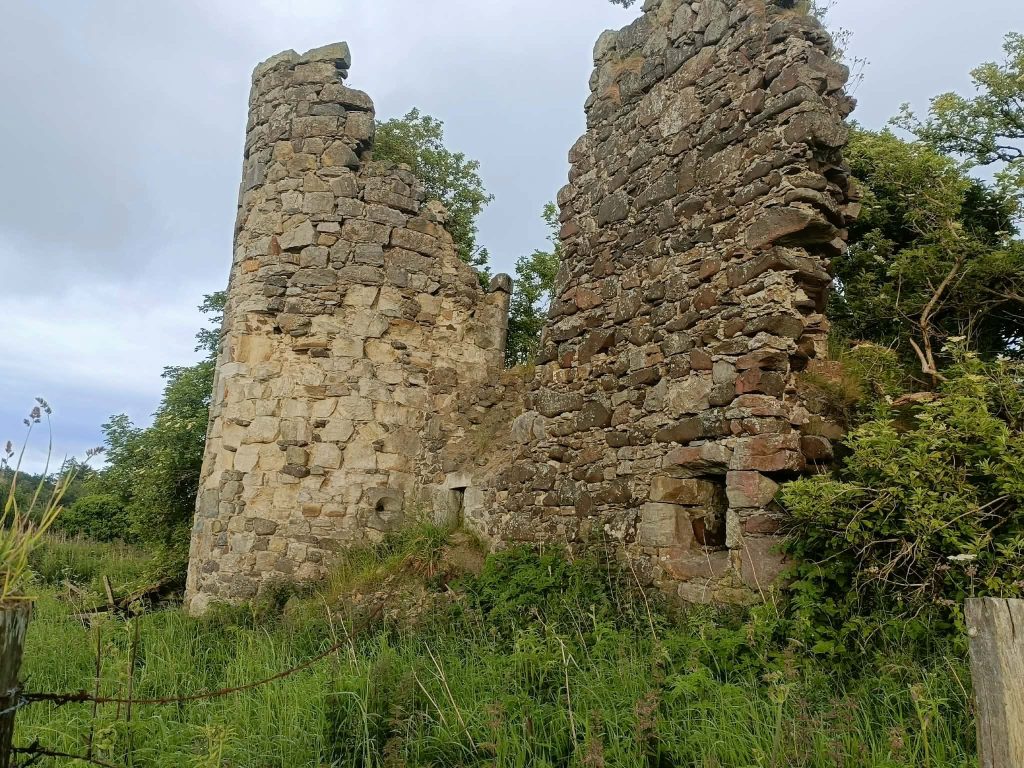
It was here in the hills that they took up residence in his Mothers Family home of Kipps. A splendid medieval, almost Fairytale Castle perched on the edge of the rocky outcrop on Kipps Hill looking Northwards over the valley to Cockleroy which stood over Kipps like a great mountainous Backdrop. With the castle sitting firmy amongst its blanket of greenery, it looks like something straight out of an Arthurian novel.
Or looking down the valley to ‘Loch Cotts‘ with its own towered castle upon its Westernmost Shore. A truly splendid scene indeed and a wonderful viewpoint for anyone with an eye for natural beauty. For a child growing up with a keen Interest in the natural world, Botany, wildlife, Trees, geography and geology, you couldn’t ask for a better situation. It’s as though the castle was designed specifically for that purpose.
If you take a walk up Kipps Hill today and take a look around, you can see for miles around. An Ideal place for the observant geographer and botanist. So, its safe to say that as far as his thirst for knowledge and understanding of the natural world went, Robert had a good laboratory at hand. He was known to sit looking out over the landscape for hours, or be out around the estate studying its array of plant species and trees.
Education
Robert always had an insatiable hunger for discovery. At a young age, he was drawn to the church. BUt he soon was repelled by all the religious arguing that he saw as a hold back. In reflection of his earlier years, he later wrote “I preferred a quiet life wherein I might not be emerged 9n the factions of Church and State.
Robert sought education and emerged himself in his studies. With this he had the encouragement and motivation from his mother who was fiercely protective of his education and made sure that the young man was given the best education for his calibre.She wasn’t going to see financial or material obstacles get in the way of his Intellectual Progress.
Edinburgh Royal College
It was here that the young Robert Sibbald spent his formative years of Education learning the basics. But he knew only too well that If he wanted to excel in the world, then he was going to have to travel for that education and prepping.
Leiden
It was here at Leiden University that an ambitiously keen Sibbald studied a range of subjects including Anatomy, Botany, Surgery and Chemistry. It was also here where he felt as though he was progressing by being able to see the world, meet new people and ‘learn the ways of men’.
Paris
After his time at Leiden University, Robert moved to Paris where he attended the University of Paris for a short time before moving on to Angers for his final leg of his schooling.
Angers
It was here in Angers at the University of Medicine that Robert Sibbald completed his formal schooling. It was here that he graduated and obtained his degree in medicine.
Geographical Endeavours
In 1682, he was appointed the position of Geographer Royal of Scotland’, the Fist person ever to be appointed this role. He soon after began compiling work for his Two Volume ‘Atlas of Scotland’.
Collaboration with John Adair
Robert Sibbald forged a relationship with contemporary Cartographer, John Adair. But they had a rift in their business relationship in 1686 after a dispute over rates of pay for work for his compendium Atlas Scoticus. This saga known as the Sibbald-Adair dispute turned out to be a bizarre bureaucratic war that dragged on for years.
Family and Personal Life
Robert Sibbald was married Twice and had Eight Children in Total. He spend a lot of his time at his home and title seat of Kipps Castle. It was a place that Robert had become very fond of. It was a place of Unique beauty. The Medieval splendour of a fantasy novel combined with the rugged rural conditions of the Bathgate Hills. He described it as “without the Ornaments of Art….. But has commendable advantages by Natures Free Gift”.
Anna Lowes
Anna Lowes was Robert Sibbalds First wife whom he loved dearly and they both lived happily at Kipps where Anna fell pregnant in 1672 with the couples First children, Twin boys. However, the Joy was soon to dissipate when fate intervened. On the evening of, Anna took a tragic fall down the stairway aat Kipps and went into labour. The twins were born in Kipps castle that night prematurely. They Both died.
The couple had another child TWo years later in 1674. A daughter named Elsie. However soon after her daughters birth, Anna took ill with fever. She went to stay with her sister and died Two nights later.
Anna Orrock
Robert married a Second time to another Anna. THis time to Anna Orrock whom he would spend the rest of his life with and would become his widow. She gave birth to their daughter who became Lady Duntarvie.
The couple had Four children together;
- Margaret –
- Elizabeth
- Euphame
- Jean – Born on 1690, Jean was the last of the couples Children to be born. Sadly, she died of Smallpox aged just Two.
Science and Medicine
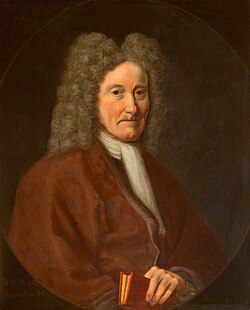
As a keen scholar of the sciences, Robert pursued his desire to standardise ;The Cure’ and set about planting and cultivating a vast array of Wildflower species on his estate at Kipps. Here he kept a close study on his subjects and created a whole apothecary of herbal remedies growing naturally in his garden. He later expanded his studies when he took on the garden at Holyrood house where he cultivated over 800 different species of rare plants that were instrumental in the discovery of contemporary medicine of the time.
A Founder member of The Royal College of Physicians, which can be found on Edinburgh’s Queen Street. He was elected President of the College in 1684.
In 1685, he was appointed the title of ‘First professor of Medicine’ at the University of Edinburgh. He was later Knighted and named as King Charles II’s physician.
Marine Biology
As well as his love for Medicine, Geography and botany, Robert Sibbald was also a keen Marine Biologist and his studies in the field let to his publishing of the Book ‘Scotus I
Brief Exile
In 1685, Sibbald briefly converted to Catholicism. Too escape the danger back home, he left for London for a short time. It was here that he joined the Royal College of Medicine.
Knighted Sir Robert Sibbald of Kipps
Robert was Knighted by King Charles II and was named ‘Royal Physician’. He would also later go on to be Royal Physician to the Kings brother and successor, James VII.
Later Life & Death
Robert Sibbald Died aged 81 on the 9th of August, 1722 at his home in Edinburgh. He was buried in the City’s Greyfriars’s Kirkyard in a Vaulted tomb by the cemetery’s Southern Wall.
The Legacy of Robert Sibbald
His vast collection of artefacts and natural samples were bequeathed to the Edinburgh University Museum when he died. This brought a large expansion to the museums content and soon after, it moved to a bigger building.
Robert Sibbalds books were sold at Auction on the 5th of February, 1723 for a total sum of £342 17s.
Kipps Castle was a modest but substantial three-storey rubble-walled country house originally built between 1625 and 1626, with an eastern extension featuring a vaulted kitchen added later in the seventeenth century. Having been unoccupied since the 1880s, the castle is today a roofless and highly dilapidated ruin, having suffered further from decay and lightning damage