
If you ask the majority of West Lothian’s population born before 1989, where they were born, they will answer ‘Bangour’, by which they actually mean Bangour General Hospital.
Now, I’ve seen a lot of references online to be people being born in the village hospital. This is the luxurious Victorian Stone built Village hospital we see a lot of online and which still stands today. But that was the mental Hospital. The Hospital where people were born was actually the Bangour General Hospital.
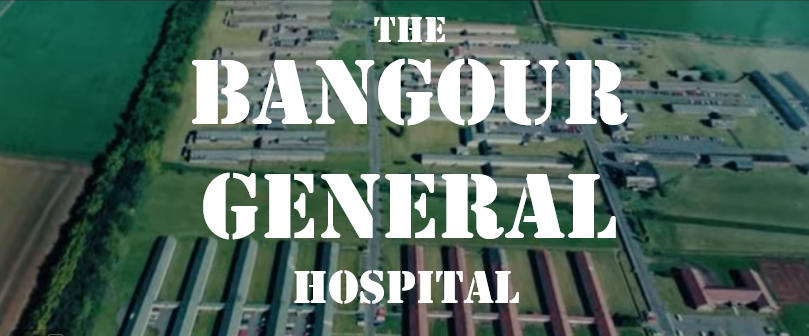
Bangour General Hospital
So, If the Old buildings laid out like a village that we see today wasn’t the general hospital, then where is it? Well, you see, this is the reason why so many web creators get the hospitals mixed up, because there’s no General Hospital to be seen anywhere around Bangour.
After the Hospitals final closure in 1989, the wooden prefab huts that made up the hospital building were dismantled and demolished and the site was cleared. If you drive past it today, you’d never know that the empty field you see today ever had anything built upon it, least of all a Hospital. The only signs of any past life on the site is the remnants of the old brick built hospital gates, which are now the gates to the field.
The Road to Bangour
If you’re approaching the site of the Bangour village hospital from the West side, it will be on your left hand side. Just before the wooded area of the hospital, you’ll see a farm road leading off to the left up the hill. At the Top of that hilly road, you’ll see a farm. Sat on the hilltop overlooking the old Turnpike road that’s now the A8 , with its silo towering above its steadings.
The road winds off to the right and then left again, skirting around the farm to it’s front of the farm past the row of cottages on the corner. It was there on the right hand side, opposite the farmyard was the Bangour General Hospital. You can still see the red brick gates which now act as a gate to the field, but were Once the Hospital entrance.
That’s right. The Entrance to West Lothian’s general Hospital was in a farm yard. You could see the chickens running around as you approached the hospital. If you were travelling to the hospital by Bus, then you had to walk all the way up that hill from the main A8 road below. Many West Lothian residents who remember the hospital will tell you that a trip to the hospital was synonymous with the smell of Cow dung. That’s how rural it was. But for most of us at the time, it was just normality.
The Story of Bangour General Hospital
The Bangour General Hospital was First built in 1939 as a Military Hospital but later went on to serve West Lothian as the General Hospital for decades after the war. Right up until 1989 when the newer, more modern Saint Johns hospital was built in Livingston.
The Military Hospital
In 1938, the British government initiated the EMS, the Emergency Medical Scheme was founded in preparation for casualties in the field. With the recent outbreak of World War II, Seven of these Hospitals were set up all over. The sites of these hospitals were very strategically chosen and Bangour was carefully selected. But they didn’t just pull Bangours name out of a hat. Tey selected it for a reason.
In 1939, at the outbreak of the First World War, the Bangour Village Hospital was used to treat the War wounded as it had its own Railway access. So it provided a viable solution for treating wounded soldiers brought back from Flanders and France. The wounded could be brought straight in from the field by rail to Bangour Station and Ambulanced to the wards where they could be treated. This went very successfully and became a leading contributory to the Britain’s victory in the First world War.
Requesition
So, with the outbreak of another conflict, the hospital was chosen to resume its role in the War Effort as a military hospital Once again. In 1939, the Village Hospital was used to treat wounded troops coming in from Europe as it had before. To rapidly secure medical capacity in the Lothian region, the Department of Health for Scotland requisitioned the psychiatric estate of Bangour Village Hospital (originally established in 1906) in 1939, temporarily converting it into the Edinburgh War Hospital (also known as the Bangour Military Hospital).
The existing mental health patients were evacuated and relocated to other asylums across Scotland to free up clinical space But, soon the place was getting overcrowded so the War Commission knew they had to extend the site to cope with the number of casualties.
The Annex
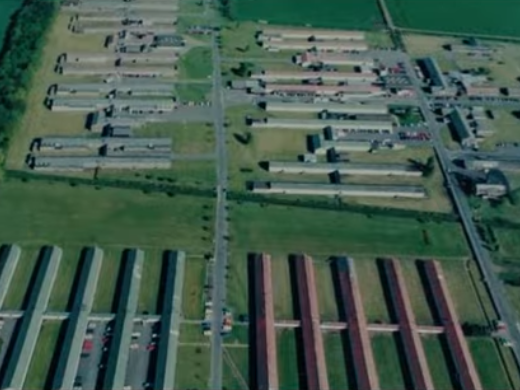
In late 1941, a brand new Annex building was built to the North West of the Psychiatric hospital. But it was a far cry from the luxurious Victorian buildings of the Village Hospital. Instead, it looked more like a Prisoner of War camp. The Ministry of Defence, who commissioned it as it was a military hospital, Adopted this model for the hospital for defensive purposes. It could better withstand any attempted Air Raid than a conventional hospital building as a bomb would only take out a hut rather than bring the whole building down.
It consisted on long, single story Prefab buildings made of wood and brick. Bricked foundations built with local brick and wooden huts constructed upon them. With the War raging in Europe and the constant, Urgent demand for munitions, Steel was limited. So they made do with wooden huts. Afterall, the war wasn’t expected to last that long. They were sufficient for their purpose as a War time Military Hospital. They also were fitted with Large Rubber Swing Doors with window panels so that wheeled beds could be pushed through them quickly in an emergency.
Although these prefabricated hutments were only intended to have an operational life of five to ten years, they remained in continuous service for half a century. By the late 20th century, these modular huts were decaying, highly drafty, and vastly inefficient by modern clinical standards. But for buildings that were only built to last 5 to 10 years, they done pretty well.
Bangour General Hospital
Staffing of the annexe was coordinated by Sir Henry Wade, the Surgical Director of the Emergency Medical Service in Scotland. Because the anticipated heavy influx of military casualties did not materialise, the annexe’s substantial bed capacity was repurposed to treat civilian patients on the surgical waiting lists of Edinburgh municipal infirmaries. Under this wartime shift, the annexe rapidly evolved into a highly specialised clinical hub.
Surgical Neurology
A specialised Brain Injuries Unit was established in 1941 under the direction of Professor Norman Dott. Operating in these temporary hutments, Dott treated military and civilian head injuries and pioneered transsphenoidal pituitary surgery using a specialised lighted nasal speculum of his own design. He also championed holistic management, psychological assessment, and vocational neurorehabilitation, for which he was awarded a CBE in 1948.
Plastic & Burns Surgery:
Housed in T Block from 1941 under Alexander Burns Wallace, this unit pioneered the “exposure method” of managing extensive burns and developed the globally recognised “Rule of Nines” to estimate Total Body Surface Area (TBSA) affected by burns. Army consultant Sir Harold Gillies made regular advisory visits to the unit.
Wartime Penicillin Hub:
The annexe served as a key regional hub for the early clinical application and wartime civilian distribution of newly developed penicillin. The Antibiotic Streptomycin was Pioneered here at Bangour which helped cure and treat so many infectious diseases.
Orthopaedics and Tuberculosis
Clinically managed by Professor Charles Cameron (Tuberculosis) and Professor Sir Walter Mercer (Orthopaedics), the annexe treated regional pulmonary and skeletal TB cases. Mercer made weekly clinical visits to perform complex bone and joint reconstructions.
Post-War NHS Integration
With the creation of the National Health Service on 5 July 1948, the annexe was officially renamed Bangour General Hospital, permanently transitioning into an acute district general hospital. The ward blocks were reassigned to represent their civilian roles:
Block P
After the transition of the Annex to a General Hospital, the P Block was used as the department for general medicine
Block Q
Q Block was used in the New General hospital for general surgery
Block S
The promise of the Welfare System that gave birth to the NHS was to look after the people from the ‘Cradle to the Grave’. So, it was soon after the hospital’s switch over that many cradles were being filled. In 1948, the Maternity ward was open where a little girl named Linda was born Into the World. The First Bangour Baby. In 1975, the Hospitals Intensive care Unit cared for the Bostock Quintuplets.
Block T
After the Change over, the old T Block continued to house plastic, burns, and maxillofacial surgery under Doctor Wallace. It was here that he would pioneer some of the major advancements in the field. It was also here at Bangour where he came up with his famous ‘Rule of Nines’, a procedure for treating burns that still gets taught in Medical colleges worldwide.
K block
This was the Nurses home
Block R
This block became the ward for tuberculosis and was Instrumental in tackling the disease with the development of Streptomycin which eventually saw the ward closed down due to lack of demand. They’d actually got rid of TB form the area. Of course, this new Anti-biotic was used nationwide to stamp out the Tuberculosis problems of the early 20th century.
But, as One department was rendered obsolete, plenty more would soon spring up. Over the next few decades, many new departments were added onto Bangour General. This One time survival based Military Hospital was evolving into a self contained, Fully functioning, Medical Community that would go on to form the basic foundations of our modern day hospital care at Saint Johns Hospital today.
1949 – Radiology & Pathology
Developed shortly after the hospital’s integration into the newly formed National Health Service (NHS) in 1948, these diagnostic departments were crucial in supporting the hospital’s transition into a fully functioning, acute general hospital.
Bangour Nursing College
In 1950, just a couple of years after the hospitals Opening as a General Hospital, The Bangour Nursing College was established. This became a very Important landmark in Nursing care and many nurses did their Training at Bangour. The College was often Training upto 100 nurses per year.
Ophthalmology
In 1955, the Ophthalmology Unit was constructed as an extension to the General Hospital.
ENT
Four years later, In 1959, the hospital saw another addition to its departments with the arrival of the Ear, Nose and Throat department.
Accident & Emergency
1969 saw the arrival of the Hospitals ‘Accident and Emergency’ ward.
Orthopaedics
The Orthopaedics ward was opened In 1975
The Death of Bangour
By the 1980’s the buildings of Bangour General Hospital were starting to show their age and were becoming increasingly outdated for the needs of a hospital. As a defensive Military Institution it was Ideal. But for a civilian hospital, It wasn’t the most convenient of places to get to in a hurry. The West Lothian Council as well as the Livingston Development Corporation pushed for a better hospital to be built to replace Bangour in serving the medical needs of West Lothian.
In 1988, the Saint Johns Hospital opened at Howden, Livingston. This was a much more modern hospital and One of the First pof Todays style of centralised Hospital. As there had been no need to worry about Luftwaffe Raids for quite some time, it seemed safe enough for more convenience when it came to accessibility and what not.
Bangour Today.
If you had to drive past the site of Bangour today without having read this, or knowing it existed, you’d never know it had been there. There’s nothing there. Nothing at all. Just an empty field. The only sign left of the hospitals existence is the Brick built gateway. But even that shows no obvious signs of a hospital having been there. In fact, given the situation of the entrance right opposite the farm yard and barn, its probably the last place you’d expect to find a hospital. But sure enough. There it was.
But, today its just an empty field that has some young trees planted in it. There was talk of it being developed into a housing scheme. But this was just a confusion with the plans for the Bangour Village Hospital down the hill. The Old mental Asylum of Bangour Village Hospital is currently being turned Into a housing estate which is a shame. It just buries the grandeur and quaintness of the Old Village Hospital in Modern Legoland houses. But at least the Old buildings are Intact from the wrecking ball.
A Flickering Ghost
I was born in Bangour. As a Child, I remember visits to the hospital and the farm looking down that long road you had to walk up from the bus stop with its towering Silo hanging over it which still looks the same today. The smell of cow dung thats smell was synonymous with hospital visits. I remember when it closed and Saint Johns Opened. It seemed so futuristic at the time. Today, it almost sounds unrealistic that you’d be expected to go traipsing through farmyards to get to the hospital. But thats just how it was and seemed entirely normal for West Lothian people at the time.
For a long time, everyone knew where the ‘Bangour Hospital’ was in reference to the General Hospital. Yet, now as time has passed, I see so many people confuse the Old mental asylum that you can still see today where they’re developing new houses. I’ve seen comments and commentary on Urban Explorers Videos of Old Bangour, speaking of how there was a maternity wing there. But it never was. It was in the field up the hill behind the farm to the North West of the Old Buildings and Church.
But, there’s very little left to see there. So I guess you cant fault people for crossing wires. All that’s left on the site of the hospital are the brick gates and a couple of nurses houses right on the corner of the road as you wind through the farm. Only that, records and memories. They bring its memory back into the light, like a flickering Ghost. I guess this is why history is so important. So, take note: What we see today can be completely vanished tomorrow.